



【Global Projects】SRON's Davao, Philippines: 10 × 10,000-Ton Steel Silos for Cement and Clinker — An Engineering Project That Has Continued to Operate Reliably Through Multiple Major Earthquakes
In bulk material storage and handling projects worldwide, countries and regions differ significantly in climate, geological conditions, material characteristics, and production requirements. For large-scale storage and handling systems, engineering design must do more than meet capacity and throughput targets. It must also integrate structural design, safety, corrosion protection, sealing, and conveying systems to suit the specific conditions of each project site.
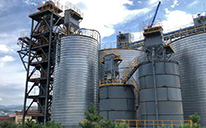
From 2020 to 2021, Henan SRON undertook the 100,000-ton cement and clinker steel silo project in Davao, Philippines, delivering a large-scale bulk material storage and handling system for a cement project under the San Miguel Group. Located in Davao, the project comprises four 10,000-ton finished cement silos and six 10,000-ton clinker silos, providing a total storage capacity of 100,000 tons. SRON was responsible for project design, equipment supply, transportation, installation guidance, commissioning, and acceptance. The facility was commissioned at the end of 2021 and has been in operation for nearly five years. Its long-term operation provides a practical reference for SRON’s delivery of large-scale bulk material storage and handling projects in challenging climates, coastal environments, and seismic conditions.
Storage and handling projects require tailored design optimization and system integration based on the natural environment, material characteristics, and operating conditions of each location.
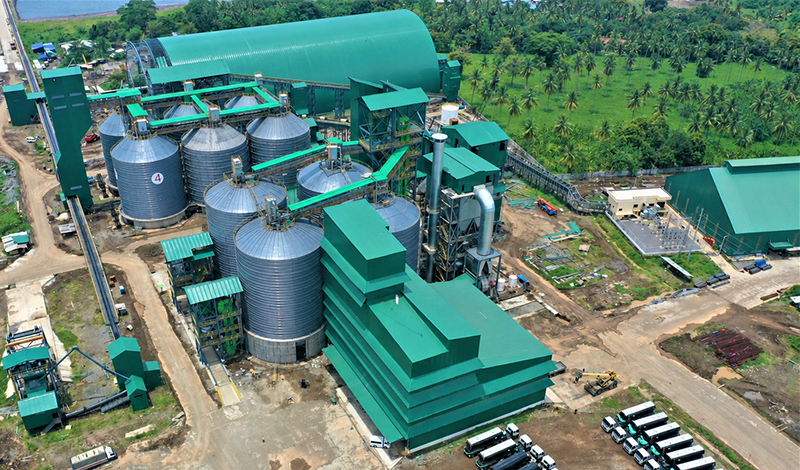
Large-Scale Project: 10 × 10,000-Ton Cement and Clinker Steel Silos in Davao, Philippines
Complex Environmental Conditions Place Higher Demands on Engineering Design
Located in the tropics, Davao is exposed to persistently high temperatures, high humidity, and heavy rainfall. In addition, the project’s proximity to Davao Gulf requires careful consideration of strong winds, marine atmospheric corrosion, and regional seismic activity.
For this large steel silo complex, with a diameter of 22 meters per silo and a total storage capacity of 100,000 tons, these environmental factors directly affect silo structural integrity, corrosion protection, sealing design, and the long-term operation of equipment and conveying systems.
The project was designed for a wind speed of 300 km/h, with structural design and verification carried out in accordance with the relevant requirements for Seismic Fortification Intensity 9.
Accordingly, the design had to meet the load-bearing and storage requirements of large-scale silos while also addressing the local climate, wind loads, seismic actions, and coastal environment through an integrated engineering approach.
Structural and Corrosion Protection Design for Extreme Operating Conditions
To account for stored-material loads, wind loads, and seismic actions, SRON developed 3D analytical models during the structural design phase. Overall stress analyses were conducted on the silo walls, roofs, and critical connection points, and structural parameters were determined based on load combinations from different directions.
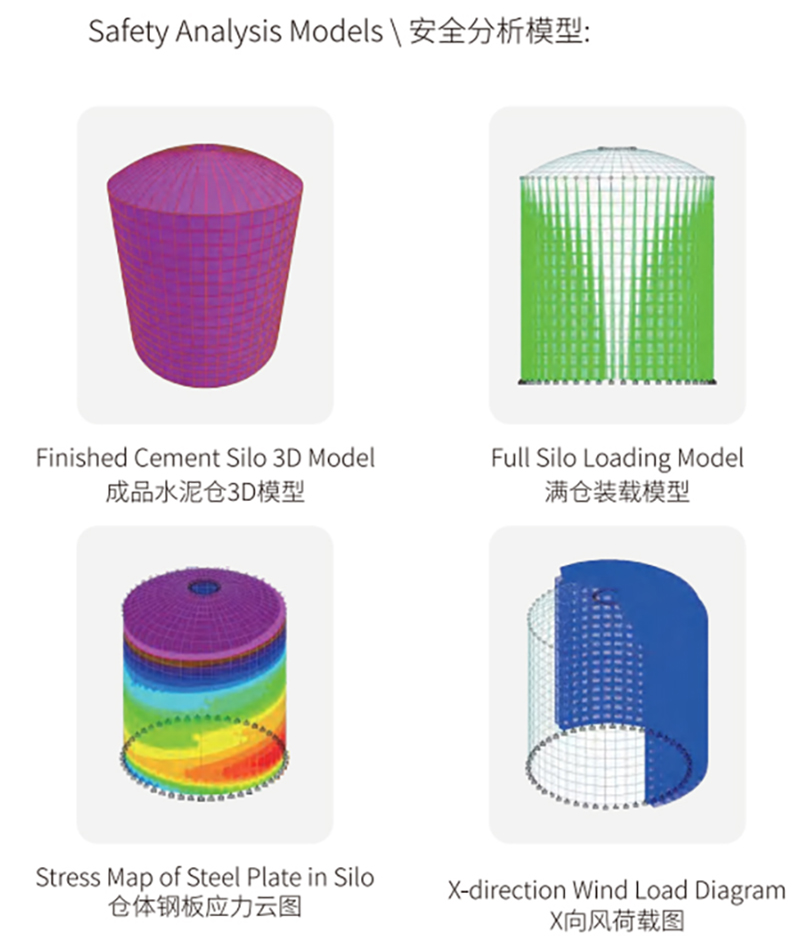
In response to the local high-temperature, high-humidity, and coastal conditions, the project also incorporated appropriate material selection, steel surface treatment, protective coating systems, and on-site construction quality control.
Corrosion protection, moisture resistance, and structural safety were not treated as separate construction tasks; instead, they were coordinated as integral elements of the overall engineering design.
By coordinating structural design, material selection, corrosion protection systems, and construction quality control, the project was engineered to withstand its complex environmental conditions.
Feed and Discharge Systems Designed Around Material Characteristics
Large-scale bulk material storage and handling projects must do more than provide sufficient storage capacity. They must also ensure reliable material intake and meet the continuous discharge and conveying requirements of production operations.
For this project, the feeding, storage, and discharge systems were designed separately to suit the material characteristics of cement and clinker.
Finished Cement Silos
The four 10,000-ton finished cement silos use top feeding and bottom fluidized discharge.
Cement is lifted by bucket elevators and conveyed into the silos through air slides, with a designed feeding capacity of 300 t/h.
A pressure-relief cone is installed at the silo bottom, while aeration air improves the flow and discharge of the powder. These measures support long-term cement storage and stable discharge.
Clinker Silos
Designed for granular material and high handling throughput, the six 10,000-ton clinker silos use belt conveying and multi-point discharge.
The designed feeding capacity is 800 t/h. Each silo is equipped with six bottom discharge outlets. After the material is collected by the discharge belt conveyor, the overall system discharge capacity reaches 700 t/h.
Through coordinated design of the silo structures, sealing, corrosion protection, feeding, storage, discharge, and conveying systems, an integrated bulk material storage and handling process system was established.
Long-Term Operation Tested Under Real-World Conditions
The project was commissioned at the end of 2021. The Philippines lies along the Pacific Ring of Fire, and major earthquakes frequently occur off the eastern and southern coasts of Davao and Mindanao. In the years since commissioning, the project area has experienced multiple significant earthquakes, including a magnitude 7.6 event in December 2023, a magnitude 7.4 event in October 2025, a magnitude 6.4 event in January 2026, and a magnitude 7.9 event on June 8, 2026 (with an epicenter approximately 179 km from Davao and strong shaking felt in the city).
Despite the repeated impact of these major earthquakes, the ten steel silos built by SRON and their supporting storage and handling systems have maintained structural stability and continuous operation. To date, no public reports have been identified of structural damage or operational interruptions caused by the earthquakes mentioned above.
From structural verification against Seismic Fortification Intensity 9 during the design phase to real-world exposure to successive magnitude 6, magnitude 7, and even magnitude 7.9 earthquakes after commissioning, the Davao project has demonstrated reliable performance through multiple major seismic events. Its continued stable operation provides practical evidence of the effectiveness of the original seismic design and construction quality, as well as a reference for applying large-scale steel silos in environments with similar climatic and seismic conditions.
From an Individual Project to Global Bulk Material Storage and Handling
The structural safety, moisture-resistant sealing, corrosion protection, stable discharge, and continuous conveying demonstrated in the Davao project are not requirements unique to the cement industry. For bulk materials such as grain, building materials, minerals, and coal, storage and conveying systems must likewise be specifically designed around material characteristics and the environmental conditions at each project location.
SRON’s business now spans more than 40 countries and regions worldwide. With over 160 patented technologies, the company serves bulk material sectors including building materials, grain, minerals, and coal.
For each project, SRON takes into account:
Material Characteristics | Storage Capacity | Climate Conditions | Geological Conditions | Production Processes | Storage and Handling Requirements
Based on these factors, SRON determines the appropriate storage structures, conveying methods, and control systems, translating the project requirements into specific engineering parameters throughout design, manufacturing, construction, and commissioning.
Engineering Capabilities for Safe Bulk Material Storage and Handling
Bulk materials are widely used in building materials, grain, minerals, coal, and other sectors. They are essential to agriculture, industrial production, and infrastructure development. Different materials have different requirements for safety, stability, and operational efficiency during storage, conveying, and transfer. Establishing reliable bulk material storage and handling systems is fundamental not only to material safety and production continuity, but also to the stable operation of related industries and the efficient functioning of supply chains.
Therefore, the value of bulk material storage and handling engineering lies not merely in constructing a storage facility or installing conveying equipment. More importantly, it lies in applying systematic engineering design and project execution to ensure material safety, operational stability, and efficiency over the long term.
From the 100,000-ton cement and clinker storage and handling project in Davao, Philippines, to bulk material projects in countries and regions around the world, SRON continues to apply its engineering capabilities to storage and transfer requirements involving different materials, environments, and operating conditions.
Applying engineering technology to ensure the safe storage and handling of bulk materials, and drawing on global project experience to support industrial development,SRON helps safeguard the essential resources on which human production and daily life depend.
SRON | Global Expert in Smart Bulk Material Storage and Handling Systems
From 2020 to 2021, Henan SRON undertook the 100,000-ton cement and clinker steel silo project in Davao, Philippines, delivering a large-scale bulk material storage and handling system for a cement project under the San Miguel Group. Located in Davao, the project comprises four 10,000-ton finished cement silos and six 10,000-ton clinker silos, providing a total storage capacity of 100,000 tons. SRON was responsible for project design, equipment supply, transportation, installation guidance, commissioning, and acceptance. The facility was commissioned at the end of 2021 and has been in operation for nearly five years. Its long-term operation provides a practical reference for SRON’s delivery of large-scale bulk material storage and handling projects in challenging climates, coastal environments, and seismic conditions.
Storage and handling projects require tailored design optimization and system integration based on the natural environment, material characteristics, and operating conditions of each location.
Large-Scale Project: 10 × 10,000-Ton Cement and Clinker Steel Silos in Davao, Philippines
Located in the tropics, Davao is exposed to persistently high temperatures, high humidity, and heavy rainfall. In addition, the project’s proximity to Davao Gulf requires careful consideration of strong winds, marine atmospheric corrosion, and regional seismic activity.
For this large steel silo complex, with a diameter of 22 meters per silo and a total storage capacity of 100,000 tons, these environmental factors directly affect silo structural integrity, corrosion protection, sealing design, and the long-term operation of equipment and conveying systems.
The project was designed for a wind speed of 300 km/h, with structural design and verification carried out in accordance with the relevant requirements for Seismic Fortification Intensity 9.
Accordingly, the design had to meet the load-bearing and storage requirements of large-scale silos while also addressing the local climate, wind loads, seismic actions, and coastal environment through an integrated engineering approach.
Structural and Corrosion Protection Design for Extreme Operating Conditions
To account for stored-material loads, wind loads, and seismic actions, SRON developed 3D analytical models during the structural design phase. Overall stress analyses were conducted on the silo walls, roofs, and critical connection points, and structural parameters were determined based on load combinations from different directions.
Corrosion protection, moisture resistance, and structural safety were not treated as separate construction tasks; instead, they were coordinated as integral elements of the overall engineering design.
By coordinating structural design, material selection, corrosion protection systems, and construction quality control, the project was engineered to withstand its complex environmental conditions.
Feed and Discharge Systems Designed Around Material Characteristics
Large-scale bulk material storage and handling projects must do more than provide sufficient storage capacity. They must also ensure reliable material intake and meet the continuous discharge and conveying requirements of production operations.
For this project, the feeding, storage, and discharge systems were designed separately to suit the material characteristics of cement and clinker.
Finished Cement Silos
The four 10,000-ton finished cement silos use top feeding and bottom fluidized discharge.
Cement is lifted by bucket elevators and conveyed into the silos through air slides, with a designed feeding capacity of 300 t/h.
A pressure-relief cone is installed at the silo bottom, while aeration air improves the flow and discharge of the powder. These measures support long-term cement storage and stable discharge.
Clinker Silos
Designed for granular material and high handling throughput, the six 10,000-ton clinker silos use belt conveying and multi-point discharge.
The designed feeding capacity is 800 t/h. Each silo is equipped with six bottom discharge outlets. After the material is collected by the discharge belt conveyor, the overall system discharge capacity reaches 700 t/h.
Through coordinated design of the silo structures, sealing, corrosion protection, feeding, storage, discharge, and conveying systems, an integrated bulk material storage and handling process system was established.
Long-Term Operation Tested Under Real-World Conditions
The project was commissioned at the end of 2021. The Philippines lies along the Pacific Ring of Fire, and major earthquakes frequently occur off the eastern and southern coasts of Davao and Mindanao. In the years since commissioning, the project area has experienced multiple significant earthquakes, including a magnitude 7.6 event in December 2023, a magnitude 7.4 event in October 2025, a magnitude 6.4 event in January 2026, and a magnitude 7.9 event on June 8, 2026 (with an epicenter approximately 179 km from Davao and strong shaking felt in the city).
Despite the repeated impact of these major earthquakes, the ten steel silos built by SRON and their supporting storage and handling systems have maintained structural stability and continuous operation. To date, no public reports have been identified of structural damage or operational interruptions caused by the earthquakes mentioned above.
From structural verification against Seismic Fortification Intensity 9 during the design phase to real-world exposure to successive magnitude 6, magnitude 7, and even magnitude 7.9 earthquakes after commissioning, the Davao project has demonstrated reliable performance through multiple major seismic events. Its continued stable operation provides practical evidence of the effectiveness of the original seismic design and construction quality, as well as a reference for applying large-scale steel silos in environments with similar climatic and seismic conditions.
From an Individual Project to Global Bulk Material Storage and Handling
The structural safety, moisture-resistant sealing, corrosion protection, stable discharge, and continuous conveying demonstrated in the Davao project are not requirements unique to the cement industry. For bulk materials such as grain, building materials, minerals, and coal, storage and conveying systems must likewise be specifically designed around material characteristics and the environmental conditions at each project location.
SRON’s business now spans more than 40 countries and regions worldwide. With over 160 patented technologies, the company serves bulk material sectors including building materials, grain, minerals, and coal.
For each project, SRON takes into account:
Material Characteristics | Storage Capacity | Climate Conditions | Geological Conditions | Production Processes | Storage and Handling Requirements
Based on these factors, SRON determines the appropriate storage structures, conveying methods, and control systems, translating the project requirements into specific engineering parameters throughout design, manufacturing, construction, and commissioning.
Engineering Capabilities for Safe Bulk Material Storage and Handling
Bulk materials are widely used in building materials, grain, minerals, coal, and other sectors. They are essential to agriculture, industrial production, and infrastructure development. Different materials have different requirements for safety, stability, and operational efficiency during storage, conveying, and transfer. Establishing reliable bulk material storage and handling systems is fundamental not only to material safety and production continuity, but also to the stable operation of related industries and the efficient functioning of supply chains.
Therefore, the value of bulk material storage and handling engineering lies not merely in constructing a storage facility or installing conveying equipment. More importantly, it lies in applying systematic engineering design and project execution to ensure material safety, operational stability, and efficiency over the long term.
From the 100,000-ton cement and clinker storage and handling project in Davao, Philippines, to bulk material projects in countries and regions around the world, SRON continues to apply its engineering capabilities to storage and transfer requirements involving different materials, environments, and operating conditions.
Applying engineering technology to ensure the safe storage and handling of bulk materials, and drawing on global project experience to support industrial development,SRON helps safeguard the essential resources on which human production and daily life depend.
SRON | Global Expert in Smart Bulk Material Storage and Handling Systems