






Applications and Value of Biomass Fuels
In the previous article, “An Introduction to Biomass Fuels,” we systematically outlined the conceptual framework, technological evolution, and global market landscape of biomass fuels. As we can see, driven by both carbon neutrality goals and energy security needs, biomass fuels are transitioning from a supplementary energy source to one of the mainstream clean energy sources.
If the technological roadmap and market potential answered the question of whether biomass fuels are “worth developing,” then this article will further focus on three core questions: Where will they be used? What value will they create? What infrastructure will enable large-scale production?
Diverse Application Areas: The Unique Advantage of Biomass Fuel as a “Three-State Convertible” Renewable Energy Source
The greatest uniqueness of biomass fuel lies in the fact that it is currently the only renewable energy source that can freely convert between solid, liquid, and gaseous states. This characteristic allows it to deeply penetrate multiple key energy-consuming sectors such as electricity, transportation, industry, and heating, and it possesses irreplaceable strategic value, especially in scenarios where electrification is difficult.
.jpg)
Transportation Sector: The Most Realistic and Fastest Path to Clean Transition
1. Road Transportation: Mature Applications, Immediate Results
In the road transportation sector, bioethanol and biodiesel have already established mature business models.
Bioethanol is blended with gasoline in forms such as E10 and E20.
Biodiesel replaces a portion of diesel fuel in B5–B20 ratios.
India’s early achievement of its E20 target demonstrates that transportation biofuels are not only emission reduction tools but also comprehensive solutions for agricultural support, energy security, and industrial upgrading.
2. Aviation Sector: SAF Opens Up Trillion-Dollar Growth Potential
Aviation is one of the most difficult industries to decarbonize globally, and Sustainable Aviation Fuel (SAF) is currently almost the only technological path that can be scaled up.
China has been promoting the routine blending of SAF at multiple hub airports since 2025, marking a shift in domestic SAF demand from “export-oriented” to “domestic demand-driven.”
Bio-jet fuel projects using waste cooking oil as raw material have not only achieved carbon emission reduction rates of over 50%, but have also established a closed-loop model of “urban waste—high-end fuel—emission reduction benefits,” greatly enhancing the industry’s sustainability.
3. Shipping Sector: From Demonstration to Commercial Operation
In recent years, there has been a surge in cases of biofuel oil and bio-methanol being used in the shipping sector.
Multiple international vessels have completed biofuel or green methanol refueling, indicating that biomass fuels are becoming a realistic option for decarbonizing shipping, rather than just a distant concept.
.jpg)
Industrial Sector: A Breakthrough for Decarbonization in High-Energy-Consuming and High-Emission Industries
In industries such as metallurgy, building materials, and ceramics, heat consumption far exceeds electricity consumption.
Biomass briquettes and biomass gas fuels can directly replace coal and oil fuels, providing stable, measurable, and emission-reducing green heat.
In zero-carbon parks and industrial park decarbonization practices, biomass heating is becoming an indispensable key component.
Industrial Power: Biogas Drives Value Upgrading
Biomass gasification and biomethane liquefaction technologies are upgrading traditional “low-value-added” biogas projects into multi-product output systems.
The Bengbu project in Anhui Province, by integrating liquefaction, biomethane, liquid CO₂, and organic fertilizer, not only achieved significant emission reductions but also solved the industry’s long-standing profitability problem, demonstrating the technological advancement and commercial evolution of biomass energy in the industrial sector.
.jpg)
Electricity and Heating: A Stable and Adjustable Cornerstone of Renewable Energy
Unlike the intermittent nature of wind and solar power, biomass energy possesses the characteristics of stable and continuous operation.
By the end of 2024, my country’s installed capacity of biomass power generation had reached nearly 46 million kilowatts.
Solid biofuels remain the mainstay of modern bioenergy globally.
In Europe, demand for wood pellets continues to grow, becoming an important support for renewable heating.
In rural and remote areas, biomass heating and biomass gas power generation improve living conditions and increase energy efficiency.
.jpg)
Multi-dimensional Value: Why is Biomass Fuel Worthy of Long-Term Investment?
1. Environmental Value: A Key Tool for High-Emission Industries to Achieve Carbon Neutrality
Biomass fuels offer significant emission reduction advantages throughout their entire life cycle. Biogas alone can reduce carbon emissions by 60%–80%, while also mitigating the volatility of wind and solar energy.
2. Economic Value: A New Industrial Chain Turning Waste into Assets
From straw and kitchen waste to fuel, fertilizer, and industrial gases, biomass fuels create a closed-loop value chain that transforms waste into treasure, significantly reducing dependence on energy imports.
3. Social Value: Supporting Rural Revitalization and Environmental Governance
Biomass projects are mostly located in rural areas, creating jobs and solving waste disposal problems, achieving synergistic ecological, economic, and social benefits.
.jpg)
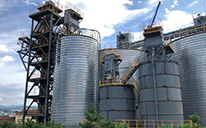
The Foundation for Large-Scale Development: Silos and Biomass Fuel Storage Technology
1. Why is storage a crucial link in biomass fuel development?
Biomass fuels are characterized by seasonal production, year-round consumption, hygroscopicity, and spontaneous combustion.
Storage conditions directly determine the fuel’s calorific value, safety, and system stability; improper storage will severely restrict project operational efficiency.
The continued growth of the global biomass storage silo market is a direct reflection of the large-scale development of biomass energy.
2. Different fuel forms require different storage solutions
Solid fuel silos: moisture-proof, fire-proof, mildew-proof, and clog-proof; suitable for power plants and heating projects.
Liquid fuel storage tanks: corrosion-proof, oxidation-proof, and nitrogen-sealed; suitable for biorefining systems.
Gaseous fuel storage tanks: emphasize pressure control, safety monitoring, and pipeline compatibility.
Scientific selection and rational layout are the core of ensuring system safety and efficiency.
3.Standardization and intelligentization are reshaping the industry.
my country has issued and will soon implement the “Technical Guidelines for Biomass Fuel Stacking and Storage,” providing unified standards for the industry. Meanwhile, intelligent monitoring, automated feeding and discharging, anti-blocking and anti-bridging systems, and AI control systems are significantly improving the safety and management level of silo operations.
.jpg)
Following the previous analysis of technology and the market, we can see that biomass fuel has already answered the question of “whether it can become a mainstream energy source.” Furthermore, the development of diverse application scenarios and the improvement of silo storage systems further answer the question of “how to utilize it effectively, stably, and efficiently in the long term.”
In the future, whoever can first establish a systemic advantage in application scenario integration capabilities, storage and logistics infrastructure, and intelligent operation will gain a competitive edge in the next stage of competition in the biomass fuel industry.
If the technological roadmap and market potential answered the question of whether biomass fuels are “worth developing,” then this article will further focus on three core questions: Where will they be used? What value will they create? What infrastructure will enable large-scale production?
Diverse Application Areas: The Unique Advantage of Biomass Fuel as a “Three-State Convertible” Renewable Energy Source
The greatest uniqueness of biomass fuel lies in the fact that it is currently the only renewable energy source that can freely convert between solid, liquid, and gaseous states. This characteristic allows it to deeply penetrate multiple key energy-consuming sectors such as electricity, transportation, industry, and heating, and it possesses irreplaceable strategic value, especially in scenarios where electrification is difficult.
Transportation Sector: The Most Realistic and Fastest Path to Clean Transition
1. Road Transportation: Mature Applications, Immediate Results
In the road transportation sector, bioethanol and biodiesel have already established mature business models.
Bioethanol is blended with gasoline in forms such as E10 and E20.
Biodiesel replaces a portion of diesel fuel in B5–B20 ratios.
India’s early achievement of its E20 target demonstrates that transportation biofuels are not only emission reduction tools but also comprehensive solutions for agricultural support, energy security, and industrial upgrading.
2. Aviation Sector: SAF Opens Up Trillion-Dollar Growth Potential
Aviation is one of the most difficult industries to decarbonize globally, and Sustainable Aviation Fuel (SAF) is currently almost the only technological path that can be scaled up.
China has been promoting the routine blending of SAF at multiple hub airports since 2025, marking a shift in domestic SAF demand from “export-oriented” to “domestic demand-driven.”
Bio-jet fuel projects using waste cooking oil as raw material have not only achieved carbon emission reduction rates of over 50%, but have also established a closed-loop model of “urban waste—high-end fuel—emission reduction benefits,” greatly enhancing the industry’s sustainability.
3. Shipping Sector: From Demonstration to Commercial Operation
In recent years, there has been a surge in cases of biofuel oil and bio-methanol being used in the shipping sector.
Multiple international vessels have completed biofuel or green methanol refueling, indicating that biomass fuels are becoming a realistic option for decarbonizing shipping, rather than just a distant concept.
Industrial Sector: A Breakthrough for Decarbonization in High-Energy-Consuming and High-Emission Industries
In industries such as metallurgy, building materials, and ceramics, heat consumption far exceeds electricity consumption.
Biomass briquettes and biomass gas fuels can directly replace coal and oil fuels, providing stable, measurable, and emission-reducing green heat.
In zero-carbon parks and industrial park decarbonization practices, biomass heating is becoming an indispensable key component.
Industrial Power: Biogas Drives Value Upgrading
Biomass gasification and biomethane liquefaction technologies are upgrading traditional “low-value-added” biogas projects into multi-product output systems.
The Bengbu project in Anhui Province, by integrating liquefaction, biomethane, liquid CO₂, and organic fertilizer, not only achieved significant emission reductions but also solved the industry’s long-standing profitability problem, demonstrating the technological advancement and commercial evolution of biomass energy in the industrial sector.
Electricity and Heating: A Stable and Adjustable Cornerstone of Renewable Energy
Unlike the intermittent nature of wind and solar power, biomass energy possesses the characteristics of stable and continuous operation.
By the end of 2024, my country’s installed capacity of biomass power generation had reached nearly 46 million kilowatts.
Solid biofuels remain the mainstay of modern bioenergy globally.
In Europe, demand for wood pellets continues to grow, becoming an important support for renewable heating.
In rural and remote areas, biomass heating and biomass gas power generation improve living conditions and increase energy efficiency.
Multi-dimensional Value: Why is Biomass Fuel Worthy of Long-Term Investment?
1. Environmental Value: A Key Tool for High-Emission Industries to Achieve Carbon Neutrality
Biomass fuels offer significant emission reduction advantages throughout their entire life cycle. Biogas alone can reduce carbon emissions by 60%–80%, while also mitigating the volatility of wind and solar energy.
2. Economic Value: A New Industrial Chain Turning Waste into Assets
From straw and kitchen waste to fuel, fertilizer, and industrial gases, biomass fuels create a closed-loop value chain that transforms waste into treasure, significantly reducing dependence on energy imports.
3. Social Value: Supporting Rural Revitalization and Environmental Governance
Biomass projects are mostly located in rural areas, creating jobs and solving waste disposal problems, achieving synergistic ecological, economic, and social benefits.
The Foundation for Large-Scale Development: Silos and Biomass Fuel Storage Technology
1. Why is storage a crucial link in biomass fuel development?
Biomass fuels are characterized by seasonal production, year-round consumption, hygroscopicity, and spontaneous combustion.
Storage conditions directly determine the fuel’s calorific value, safety, and system stability; improper storage will severely restrict project operational efficiency.
The continued growth of the global biomass storage silo market is a direct reflection of the large-scale development of biomass energy.
2. Different fuel forms require different storage solutions
Solid fuel silos: moisture-proof, fire-proof, mildew-proof, and clog-proof; suitable for power plants and heating projects.
Liquid fuel storage tanks: corrosion-proof, oxidation-proof, and nitrogen-sealed; suitable for biorefining systems.
Gaseous fuel storage tanks: emphasize pressure control, safety monitoring, and pipeline compatibility.
Scientific selection and rational layout are the core of ensuring system safety and efficiency.
3.Standardization and intelligentization are reshaping the industry.
my country has issued and will soon implement the “Technical Guidelines for Biomass Fuel Stacking and Storage,” providing unified standards for the industry. Meanwhile, intelligent monitoring, automated feeding and discharging, anti-blocking and anti-bridging systems, and AI control systems are significantly improving the safety and management level of silo operations.
Following the previous analysis of technology and the market, we can see that biomass fuel has already answered the question of “whether it can become a mainstream energy source.” Furthermore, the development of diverse application scenarios and the improvement of silo storage systems further answer the question of “how to utilize it effectively, stably, and efficiently in the long term.”
In the future, whoever can first establish a systemic advantage in application scenario integration capabilities, storage and logistics infrastructure, and intelligent operation will gain a competitive edge in the next stage of competition in the biomass fuel industry.