





Why Are Steel Silos Increasingly Used for Storage in Mining and Aggregate Projects?
Steel Silo Technology & Engineering Insight
In mining, sand and aggregate, building material, and cement production projects, the storage of raw materials and finished products is a critical factor influencing the stable operation of the entire production system. Conventional projects typically rely on open-air stockpiles, simple sheds, or enclosed warehouses to store bulk materials such as limestone, sand and gravel, manufactured sand, and mineral powder.
However, as mining projects evolve toward larger scales and greater emphasis on environmental protection, automation, and intelligent operation, traditional storage sheds are increasingly revealing limitations regarding land use, environmental compliance, material management, and automated conveying. In contrast, enclosed bulk material storage systems—exemplified by steel silos—offer superior integration with crushing, screening, conveying, proportioning, and loading systems; consequently, an increasing number of mining and aggregate projects are adopting steel silos for centralized material storage.
.jpg)
The shift from “open-air stockpiling” to “enclosed storage” represents, first and foremost, a change in environmental protection practices.
In traditional open-air yards, materials—particularly limestone, manufactured sand, mineral powder, and fine-grained aggregates—remain exposed to the air for extended periods, making them prone to generating fugitive dust during loading, unloading, transfer, and exposure to wind. In contrast, enclosed steel silos allow bulk materials to be stored in a relatively isolated space, creating a fully enclosed logistics chain that integrates roof-mounted dust collection, conveying equipment, and discharge systems.
Materials exiting the crusher are transported into the steel silos via belt conveyors, bucket elevators, or other conveying equipment; when required for production, they are discharged at controlled rates through silo-bottom mechanisms and fed into the downstream production line. This approach minimizes direct environmental exposure and facilitates the installation of centralized dust collection systems. For mining and building materials enterprises facing increasingly stringent environmental regulations, enclosed storage is no longer merely a means to improve the facility’s appearance—it has become a vital component of modern mine project design.
Steel silos minimize the physical footprint and maximize the utilization efficiency of limited land.
Traditional storage sheds rely primarily on horizontal space. Storing large quantities of aggregates in this manner requires expanding the storage yard area while also allocating space for transport roads, loader maneuvering zones, and material transfer operations. Expanding such sheds is often difficult for projects facing land constraints, significant site elevation differences, or pre-existing site layouts.
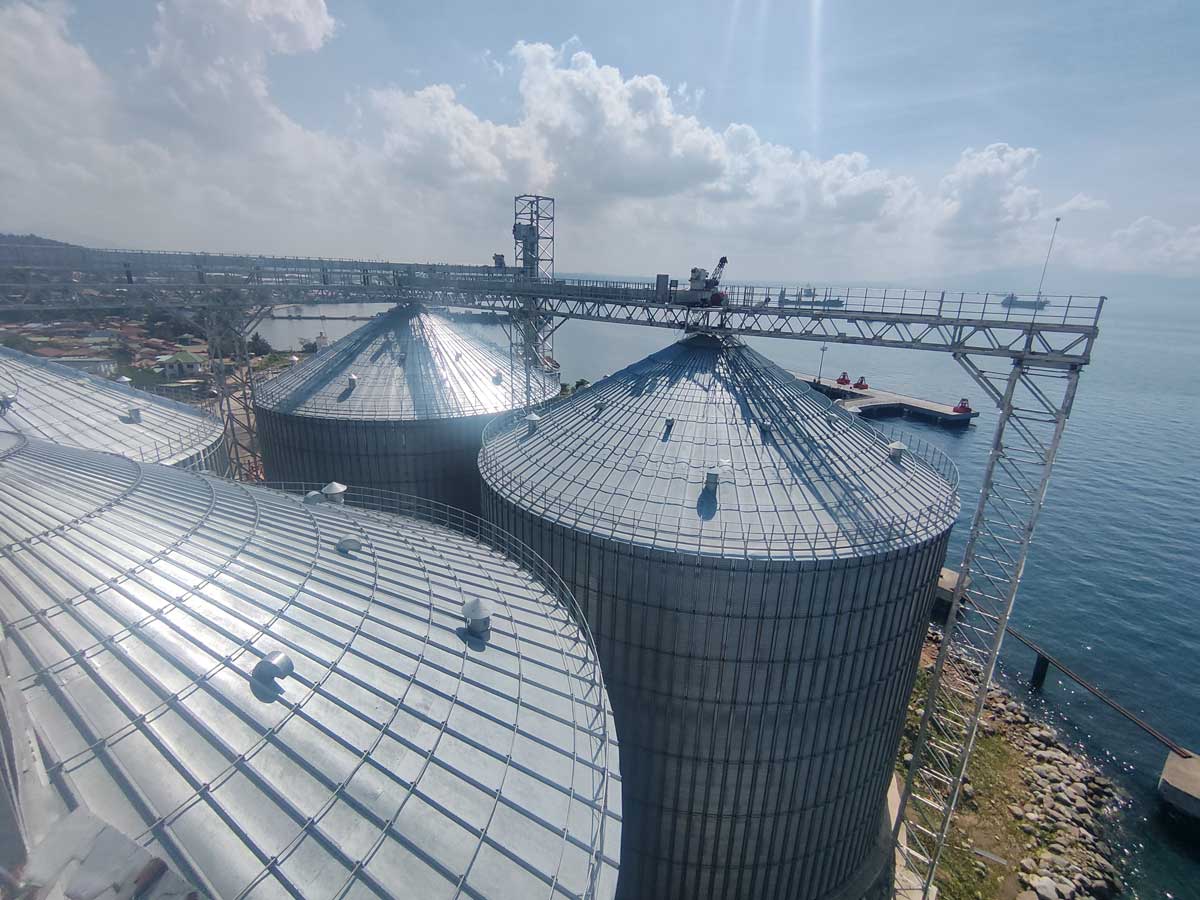
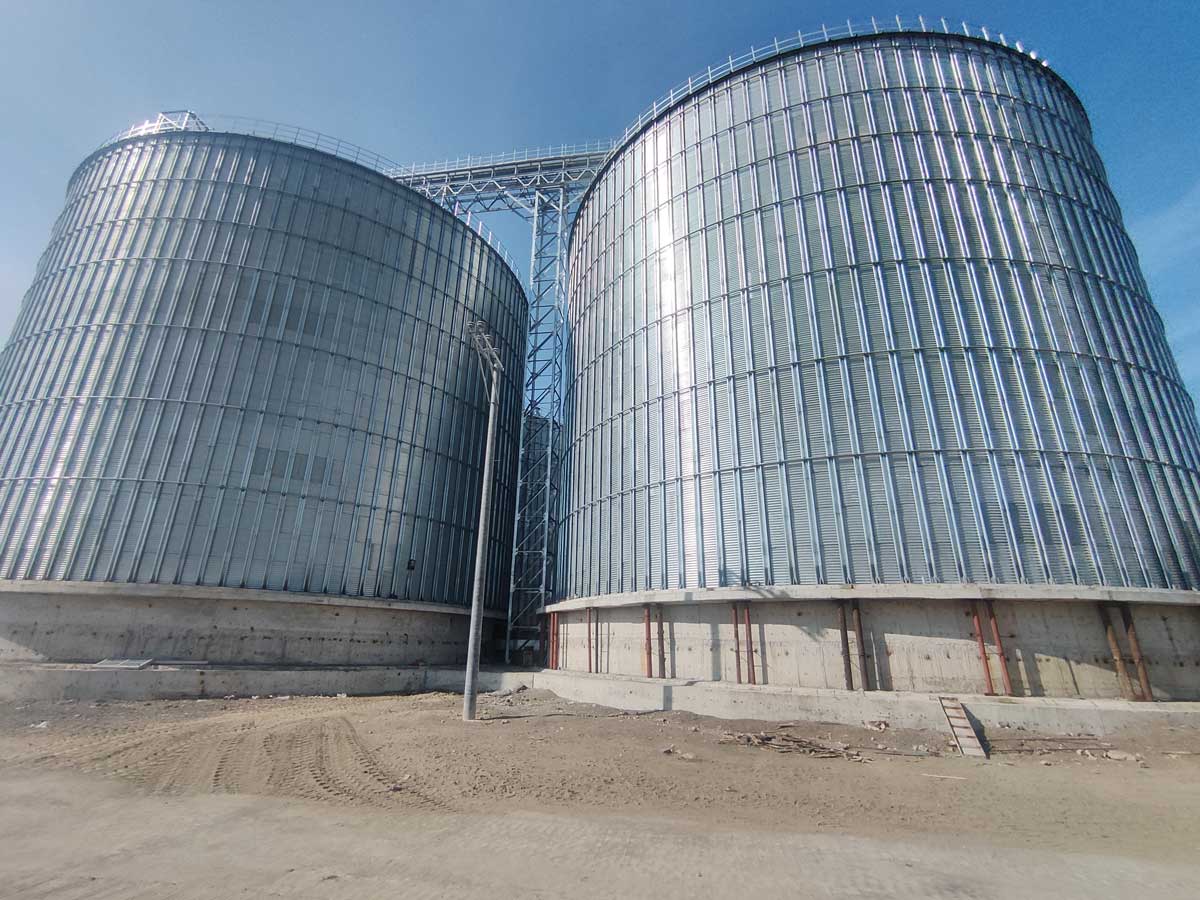
In contrast, steel silos effectively utilize vertical space. By optimizing the silo’s diameter and height, substantial storage capacity can be achieved within a relatively small footprint. Multiple silos can be configured to store different materials separately—such as segregating stone of various particle sizes, manufactured sand, stone dust, or other bulk materials.
For mining and aggregate projects, this layout is particularly well-suited to the following scenarios:
Sand and aggregate production lines with limited site space;
Building material projects located near urban areas or subject to strict environmental regulations;
Retrofitting projects for existing plants that need to increase capacity without significantly expanding their land area;
Large-scale mining projects requiring multiple independent storage zones.
Therefore, when planning new projects, steel silos serve not merely as storage equipment but as a key component in optimizing the spatial layout of the facility.
Minimizing manual handling to seamlessly link aggregate storage with the production line
A characteristic of traditional storage sheds is their heavy reliance on machinery such as wheel loaders and forklifts. Once materials enter the shed, these vehicles are required for stacking, transferring, and reclaiming the material. For large-scale projects, this entails continuous equipment operation, fuel consumption, manual labor, and maintenance costs.
In contrast, steel silos can be directly integrated with conveying, weighing, and automated discharge systems. Once materials enter the silo from the production line, they can be discharged automatically based on production requirements. Through the use of level sensors, weighing systems, gates, feeders, and a central control system, inventory levels across different silos can be monitored in real time. This shifts the storage process from traditional “manual management” to a model driven by “equipment and control systems.”
This transformation is particularly significant for large-scale mining enterprises. The larger the production scale and the more frequent the material turnover, the more pronounced the gains in management efficiency provided by automated storage systems become.
Steel silos are more easily integrated with automation and intelligent systems.
Modern mining projects are transitioning from traditional mechanized production to digital production. In the past, operators might have relied on on-site inspections to assess material levels, inventory, and equipment status. In contrast, modern steel silo systems can be equipped with radar level gauges, weighing equipment, temperature sensors, and other process monitoring devices, all integrated with PLCs and central control systems.
From the control room, managers can monitor:
Current material inventory levels;
Inlet and outlet status;
Conveying equipment operation;
Silo-bottom discharge status;
Storage quantities of different materials;
Equipment alarm notifications.
For large mining enterprises, this means the storage system can function as an integral part of the overall production management system. Steel silos offer excellent compatibility with automated conveying, automatic batching, and intelligent loading systems—a crucial advantage for unmanned operations, centralized control, and the development of digital mines.
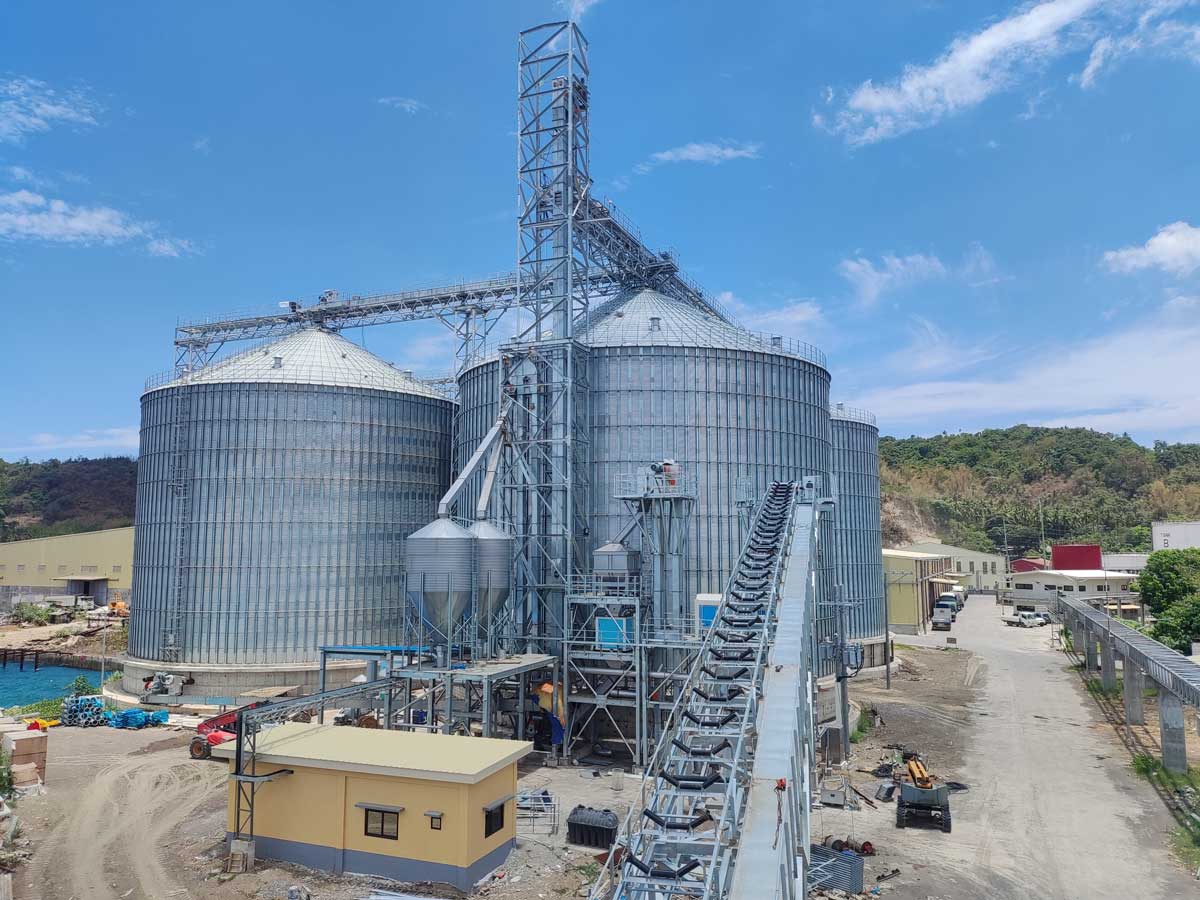
Enclosed storage offers greater stability in the face of rain, snow, and complex weather conditions.
Mining and aggregate projects are typically located in industrial zones, mountainous areas, or open-air production environments, where changing weather can directly impact material storage. Open-air stockpiles are vulnerable to rain, snow, and wind-blown dust. For fine-grained materials like manufactured sand, rainfall can alter moisture content, thereby affecting subsequent processes such as screening, metering, proportioning, and concrete production.
Steel silos create an enclosed storage environment through their roofs and sidewalls, minimizing the direct impact of rain and external conditions on the materials. For instance, while traditional stockpiles might require a suspension of certain loading and unloading operations during prolonged rainfall, enclosed storage systems can maintain relatively stable conditions for material intake and discharge. This offers practical value for mining and building material projects that require continuous year-round production and a stable supply of materials.
A steel silo is not merely a simple “storage tank,” but rather a component of a comprehensive storage system.
The core of a modern bulk material storage system for mining operations extends beyond the steel silo structure itself. A complete aggregate storage system typically comprises the steel silo, an intake conveying system, a dust removal system, material level monitoring, silo-bottom discharge equipment, feeding equipment, a weighing system, and an electrical control system. Consequently, the project design phase requires holistic planning that takes into account material characteristics, storage capacity, intake and discharge rates, and the plant layout.
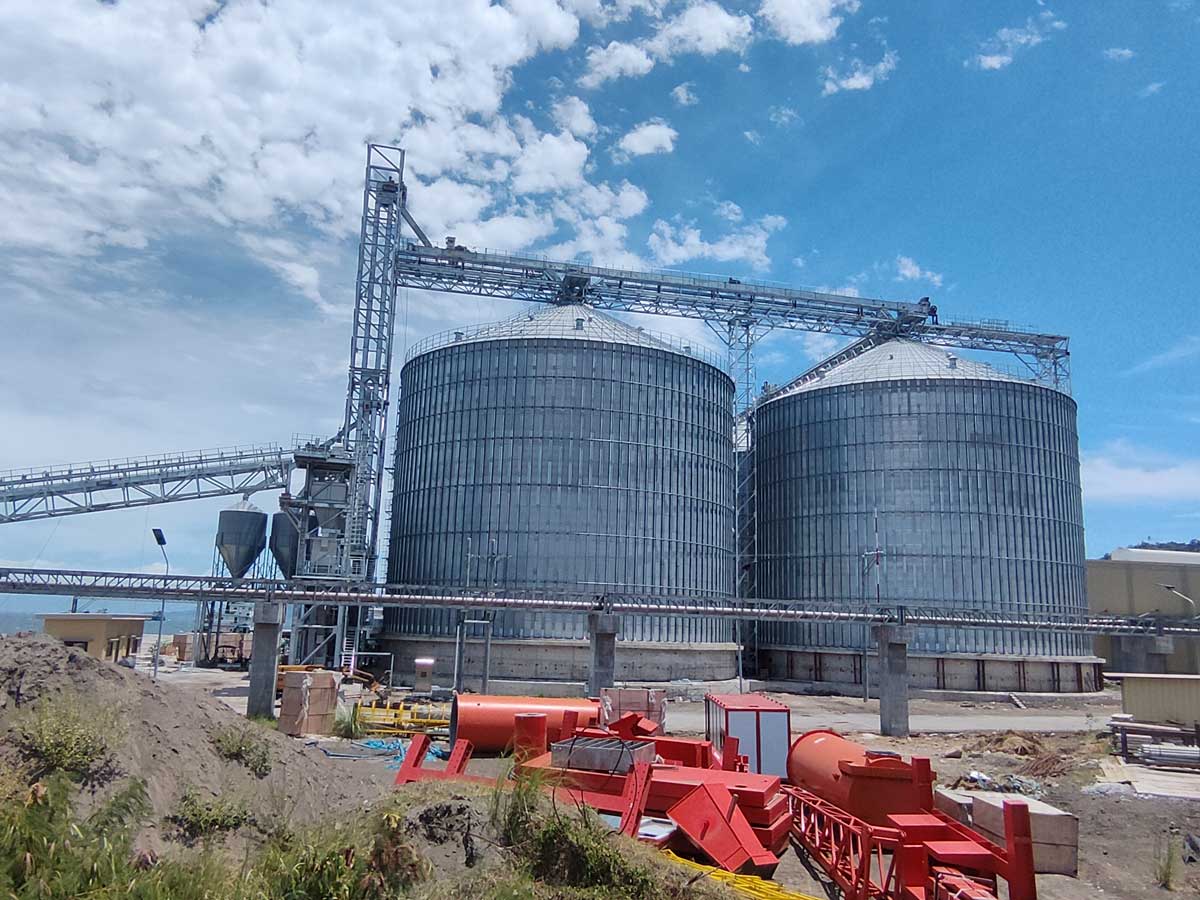
The transition from traditional stockpiles to enclosed steel silos represents more than just a change in storage methods; it reflects the increasingly stringent demands placed on mining and aggregate projects regarding environmental protection, space utilization, automation, material management, and long-term operational efficiency. For new sand and aggregate production lines, steel silos can be integrated into the overall planning alongside crushing, screening, conveying, proportioning, and truck-loading systems; for existing mining operations, the addition of enclosed storage facilities helps mitigate issues such as dust emissions and inefficient material management associated with traditional open-air stockpiles. Consequently, in modern mining, aggregate, and building material projects, steel silos are evolving from simple storage units into critical nodes that link production, warehousing, conveying, and intelligent control systems.