





Wood Pellet Storage Silos: Supporting Low-Carbon Biomass Fuel Development
Against the backdrop of the global push for “dual carbon targets” and energy transition, clean and renewable energy are gradually becoming an important component of the energy structure. Among these, biomass fuels, due to their wide availability, renewability, and relatively low carbon emissions, are considered a key alternative to traditional fossil fuels. As a representative of biomass fuels, wood pellets are widely used in power generation, heating, and industrial boilers.
With the continuous expansion of the biomass energy industry, the requirements for wood pellet storage systems are also increasing. Traditional storage methods are insufficient to meet the safety, efficiency, and environmental protection needs of modern energy companies. Therefore, wood pellet steel silos, as an advanced bulk material storage device, are gradually becoming an important solution in the field of biomass fuel storage.
.jpg)
The Important Role of Biomass Fuels in Reducing Carbon Emissions
Biomass fuels are clean energy sources processed from agricultural and forestry waste (such as sawdust, straw, and branches). Compared to traditional fossil fuels like coal, biomass fuels have significant environmental advantages.
1. Clear Carbon Cycle Characteristics: The carbon dioxide released during the combustion of sawdust pellets is essentially equivalent to the amount of carbon absorbed by plants during growth, thus forming an overall carbon cycle and achieving relatively low carbon emissions.
2. Reduced Dependence on Fossil Fuels: In many countries and regions, biomass fuels are widely used in:
Biomass Power Plants
Industrial Boiler Fuels
District Heating Systems
Residential Heating
By replacing coal and oil, they can effectively reduce greenhouse gas emissions.
3. Promoting Resource Recycling Wood pellet fuel mainly comes from wood processing residues and agricultural waste, which not only reduces waste disposal pressure but also improves resource utilization efficiency. However, with the expansion of the biomass energy industry, how to safely and efficiently store wood pellets has become a crucial issue that enterprises must address.
.jpg)
Major Challenges in Wood Pellet Storage
While wood pellets offer advantages such as high density, stable calorific value, and convenient transportation, several technical challenges remain during storage:
1. High Hygroscopicity: Wood pellets readily absorb moisture from the air, potentially leading to swelling, breakage, or even mold growth.
2. Dust Issues: Dust is easily generated during transportation and handling. Improper control can not only impact the environment but also pose safety risks.
3. Risk of Spontaneous Combustion: In high-temperature, enclosed environments, wood pellets may slowly oxidize, accumulating heat and posing a risk of spontaneous combustion.
4. Increasing Storage Scale: As biomass power plants and energy companies expand, single storage volumes often reach thousands or even tens of thousands of tons, placing higher demands on storage facilities.
Therefore, the construction of specialized wood pellet silos has become an inevitable trend in the industry.
.jpg)
Structural and Technical Features of Wood Pellet Steel Silos
Wood pellet steel silos are large-scale storage facilities specifically designed for storing granular bulk materials. Their main structure is constructed from high-strength galvanized steel sheets, assembled or spiral-rolled, and features large capacity, excellent sealing, and a high degree of automation.
Main Structural Components
A complete wood pellet steel silo system typically includes:
Silo Body: The silo body structure is made of galvanized steel sheets, which offer excellent strength, corrosion resistance, and service life. Galvanized steel sheets are cost-effective and have a wide range of applications. The silo structure design fully considers material characteristics and environmental conditions, ensuring overall structural safety, reliability, and excellent sealing.
Ventilation System: The ventilation system maintains pressure balance inside and outside the silo, preventing pressure changes during material loading and unloading from affecting the silo structure. This system generally includes vents, breather valves, or ventilation ducts, ensuring airflow while reducing dust leakage. A well-designed ventilation system helps improve storage safety and extend equipment lifespan.
Temperature Monitoring System: The temperature monitoring system is used to monitor the temperature changes of materials inside the silo in real time, preventing material deterioration or safety risks caused by abnormal temperatures. The system is typically equipped with multiple temperature sensors to continuously monitor different locations within the silo and transmit the data to the control system. When the temperature exceeds the set range, an alarm can be triggered promptly or appropriate measures can be taken to ensure material quality and storage safety.
Automatic Feeding and Discharging System: The automatic feeding and discharging system is used to achieve efficient material conveying and automated management. The feeding section can use elevators, pneumatic conveyors, or belt conveyors to stably transport materials into the silo; the discharging section uses screw conveyors, discharge valves, or gasification devices to achieve uniform discharge. The system can be linked with the automatic control system to achieve quantitative control, continuous operation, and unmanned operation, improving overall operating efficiency.
Dust Removal System: The dust removal system is used to collect and treat dust generated during the feeding and discharging processes, reducing environmental pollution and improving working conditions. The system generally consists of a silo top dust collector, a filtration device, and an exhaust system, effectively capturing fine dust particles. Meanwhile, the dust removal system also helps maintain stable air pressure inside the storage area, preventing dust leakage and meeting environmental protection and safety production requirements.
Through the comprehensive coordination of these systems, safe and stable storage of wood pellets can be achieved.
.jpg)
Core Advantages of Wood Pellet Silos in Biomass Fuel Storage:
1. Excellent Sealing Performance, Moisture and Mildew Prevention: The sealed steel silo design effectively prevents rainwater and external moisture from entering the silo, thus avoiding moisture absorption of the wood pellets. Maintaining a dry storage environment is crucial for biomass fuels, directly affecting their calorific value and combustion efficiency.
2. Large-Capacity Storage, Improved Energy Supply Stability: Modern biomass energy companies typically require stable, large-scale fuel reserves. Wood pellet silos can be designed with capacities ranging from hundreds to tens of thousands of tons, meeting the needs of large power plants or heating systems. Their three-dimensional structural design also effectively reduces land occupation, improving land use efficiency.
3. Automated Management, Improved Operational Efficiency: Modern wood pellet steel silos are typically equipped with automated conveying equipment, such as belt conveyors, screw conveyors, and automatic unloading systems. These automated systems enable automatic fuel loading and unloading, as well as inventory management, significantly reducing manual operation and improving production efficiency.
4. Equipped with a safety monitoring system to reduce the risk of spontaneous combustion:To address the potential spontaneous combustion risk of wood pellets, steel silos are typically equipped with the following safety systems: temperature monitoring systems, ventilation and cooling systems, and gas detection systems. These systems can monitor the internal environment in real time and take timely measures to ensure storage safety in case of any abnormalities.
5. Dust control to meet environmental requirements:Dust control is a crucial aspect of biomass fuel storage. Steel silos can be equipped with dust removal systems to effectively reduce dust emissions, improve the working environment, and meet environmental emission standards.
6. Robust structure and long service life: Wood pellet steel silos are typically made of hot-dip galvanized steel sheets, which have excellent corrosion resistance and structural strength. Their design life is typically over 20 years, with low maintenance costs and good economic benefits.
.jpg)
Project Case Study
Malaysia 3x5000T Wood Pellet Silo Project
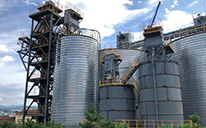
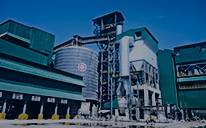
In Southeast Asia, a core biomass energy production region, SRON’s successfully delivered 3x5000T wood pellet storage project in Malaysia has become a benchmark project in the area. The project primarily served a large renewable energy company, for which SRON designed and constructed three 5000-ton spiral steel silos. Addressing Malaysia’s hot and humid tropical rainforest climate and the harsh environment of the project site, which is frequently threatened by typhoons, the SRON team provided customized solutions. The project included spiral steel silos, unloading pits, weighbridges, conveying systems, and long-distance conveying systems outside the silos. Our company fully considered the storage characteristics of wood pellets and the local environment during the early design phase, and strictly monitored and managed the temperature and humidity within the silos in real time. Meanwhile, considering the characteristics of the terminal project, the project is equipped with a high-throughput silo loading and unloading system, which shortens the ship berthing time and solves problems such as blockage, maintenance difficulties and high labor costs that may occur during centralized feeding, dust removal and long-distance transportation, thus meeting the customer’s demand for fully automated warehousing and transportation.
.jpg)
As a crucial facility for biomass fuel storage, steel silos for wood pellets are increasingly being adopted by energy companies due to their advantages such as large capacity, high safety, high automation, and good environmental performance. Constructing modern wood pellet silo systems not only improves storage efficiency but also ensures a stable fuel supply, providing strong support for the development of the biomass energy industry. In the future, with the continuous advancement of clean energy technologies, the application of steel silos in biomass fuel storage will become even more widespread, making a greater contribution to achieving a low-carbon economy and sustainable development.
With the continuous expansion of the biomass energy industry, the requirements for wood pellet storage systems are also increasing. Traditional storage methods are insufficient to meet the safety, efficiency, and environmental protection needs of modern energy companies. Therefore, wood pellet steel silos, as an advanced bulk material storage device, are gradually becoming an important solution in the field of biomass fuel storage.
The Important Role of Biomass Fuels in Reducing Carbon Emissions
Biomass fuels are clean energy sources processed from agricultural and forestry waste (such as sawdust, straw, and branches). Compared to traditional fossil fuels like coal, biomass fuels have significant environmental advantages.
1. Clear Carbon Cycle Characteristics: The carbon dioxide released during the combustion of sawdust pellets is essentially equivalent to the amount of carbon absorbed by plants during growth, thus forming an overall carbon cycle and achieving relatively low carbon emissions.
2. Reduced Dependence on Fossil Fuels: In many countries and regions, biomass fuels are widely used in:
Biomass Power Plants
Industrial Boiler Fuels
District Heating Systems
Residential Heating
By replacing coal and oil, they can effectively reduce greenhouse gas emissions.
3. Promoting Resource Recycling Wood pellet fuel mainly comes from wood processing residues and agricultural waste, which not only reduces waste disposal pressure but also improves resource utilization efficiency. However, with the expansion of the biomass energy industry, how to safely and efficiently store wood pellets has become a crucial issue that enterprises must address.
Major Challenges in Wood Pellet Storage
While wood pellets offer advantages such as high density, stable calorific value, and convenient transportation, several technical challenges remain during storage:
1. High Hygroscopicity: Wood pellets readily absorb moisture from the air, potentially leading to swelling, breakage, or even mold growth.
2. Dust Issues: Dust is easily generated during transportation and handling. Improper control can not only impact the environment but also pose safety risks.
3. Risk of Spontaneous Combustion: In high-temperature, enclosed environments, wood pellets may slowly oxidize, accumulating heat and posing a risk of spontaneous combustion.
4. Increasing Storage Scale: As biomass power plants and energy companies expand, single storage volumes often reach thousands or even tens of thousands of tons, placing higher demands on storage facilities.
Therefore, the construction of specialized wood pellet silos has become an inevitable trend in the industry.
Structural and Technical Features of Wood Pellet Steel Silos
Wood pellet steel silos are large-scale storage facilities specifically designed for storing granular bulk materials. Their main structure is constructed from high-strength galvanized steel sheets, assembled or spiral-rolled, and features large capacity, excellent sealing, and a high degree of automation.
Main Structural Components
A complete wood pellet steel silo system typically includes:
Silo Body: The silo body structure is made of galvanized steel sheets, which offer excellent strength, corrosion resistance, and service life. Galvanized steel sheets are cost-effective and have a wide range of applications. The silo structure design fully considers material characteristics and environmental conditions, ensuring overall structural safety, reliability, and excellent sealing.
Ventilation System: The ventilation system maintains pressure balance inside and outside the silo, preventing pressure changes during material loading and unloading from affecting the silo structure. This system generally includes vents, breather valves, or ventilation ducts, ensuring airflow while reducing dust leakage. A well-designed ventilation system helps improve storage safety and extend equipment lifespan.
Temperature Monitoring System: The temperature monitoring system is used to monitor the temperature changes of materials inside the silo in real time, preventing material deterioration or safety risks caused by abnormal temperatures. The system is typically equipped with multiple temperature sensors to continuously monitor different locations within the silo and transmit the data to the control system. When the temperature exceeds the set range, an alarm can be triggered promptly or appropriate measures can be taken to ensure material quality and storage safety.
Automatic Feeding and Discharging System: The automatic feeding and discharging system is used to achieve efficient material conveying and automated management. The feeding section can use elevators, pneumatic conveyors, or belt conveyors to stably transport materials into the silo; the discharging section uses screw conveyors, discharge valves, or gasification devices to achieve uniform discharge. The system can be linked with the automatic control system to achieve quantitative control, continuous operation, and unmanned operation, improving overall operating efficiency.
Dust Removal System: The dust removal system is used to collect and treat dust generated during the feeding and discharging processes, reducing environmental pollution and improving working conditions. The system generally consists of a silo top dust collector, a filtration device, and an exhaust system, effectively capturing fine dust particles. Meanwhile, the dust removal system also helps maintain stable air pressure inside the storage area, preventing dust leakage and meeting environmental protection and safety production requirements.
Through the comprehensive coordination of these systems, safe and stable storage of wood pellets can be achieved.
Core Advantages of Wood Pellet Silos in Biomass Fuel Storage:
1. Excellent Sealing Performance, Moisture and Mildew Prevention: The sealed steel silo design effectively prevents rainwater and external moisture from entering the silo, thus avoiding moisture absorption of the wood pellets. Maintaining a dry storage environment is crucial for biomass fuels, directly affecting their calorific value and combustion efficiency.
2. Large-Capacity Storage, Improved Energy Supply Stability: Modern biomass energy companies typically require stable, large-scale fuel reserves. Wood pellet silos can be designed with capacities ranging from hundreds to tens of thousands of tons, meeting the needs of large power plants or heating systems. Their three-dimensional structural design also effectively reduces land occupation, improving land use efficiency.
3. Automated Management, Improved Operational Efficiency: Modern wood pellet steel silos are typically equipped with automated conveying equipment, such as belt conveyors, screw conveyors, and automatic unloading systems. These automated systems enable automatic fuel loading and unloading, as well as inventory management, significantly reducing manual operation and improving production efficiency.
4. Equipped with a safety monitoring system to reduce the risk of spontaneous combustion:To address the potential spontaneous combustion risk of wood pellets, steel silos are typically equipped with the following safety systems: temperature monitoring systems, ventilation and cooling systems, and gas detection systems. These systems can monitor the internal environment in real time and take timely measures to ensure storage safety in case of any abnormalities.
5. Dust control to meet environmental requirements:Dust control is a crucial aspect of biomass fuel storage. Steel silos can be equipped with dust removal systems to effectively reduce dust emissions, improve the working environment, and meet environmental emission standards.
6. Robust structure and long service life: Wood pellet steel silos are typically made of hot-dip galvanized steel sheets, which have excellent corrosion resistance and structural strength. Their design life is typically over 20 years, with low maintenance costs and good economic benefits.
Project Case Study
Malaysia 3x5000T Wood Pellet Silo Project
In Southeast Asia, a core biomass energy production region, SRON’s successfully delivered 3x5000T wood pellet storage project in Malaysia has become a benchmark project in the area. The project primarily served a large renewable energy company, for which SRON designed and constructed three 5000-ton spiral steel silos. Addressing Malaysia’s hot and humid tropical rainforest climate and the harsh environment of the project site, which is frequently threatened by typhoons, the SRON team provided customized solutions. The project included spiral steel silos, unloading pits, weighbridges, conveying systems, and long-distance conveying systems outside the silos. Our company fully considered the storage characteristics of wood pellets and the local environment during the early design phase, and strictly monitored and managed the temperature and humidity within the silos in real time. Meanwhile, considering the characteristics of the terminal project, the project is equipped with a high-throughput silo loading and unloading system, which shortens the ship berthing time and solves problems such as blockage, maintenance difficulties and high labor costs that may occur during centralized feeding, dust removal and long-distance transportation, thus meeting the customer’s demand for fully automated warehousing and transportation.
As a crucial facility for biomass fuel storage, steel silos for wood pellets are increasingly being adopted by energy companies due to their advantages such as large capacity, high safety, high automation, and good environmental performance. Constructing modern wood pellet silo systems not only improves storage efficiency but also ensures a stable fuel supply, providing strong support for the development of the biomass energy industry. In the future, with the continuous advancement of clean energy technologies, the application of steel silos in biomass fuel storage will become even more widespread, making a greater contribution to achieving a low-carbon economy and sustainable development.