




How can industrial material handling systems improve the efficiency of smart factories?
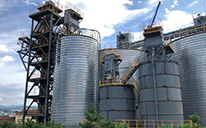
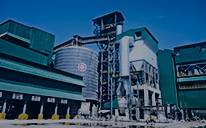
Against the backdrop of the rapid development of Industry 4.0 and smart manufacturing, more and more enterprises are beginning to focus on the automation and intelligent upgrading of their production processes. Within the entire smart factory system, industrial material handling systems, as a crucial link connecting production, warehousing, and logistics, are playing an increasingly critical role. SRON, a global provider of bulk material storage and transportation engineering system solutions, specializes in providing safe, reliable, technologically advanced, low-carbon, and environmentally friendly EPC general contracting services for industries such as grain, minerals, building materials, and coal, including silo engineering systems, enclosed material yard systems, rapid loading systems, and terminal loading and unloading systems. SRON not only provides customers with steel silo design and construction services but also offers complete bulk material conveying system solutions, including bucket elevators, belt conveyors, scraper conveyors, pneumatic conveying systems, and other equipment, helping enterprises achieve intelligent upgrades.

Why are industrial material handling systems so important?
In modern industrial production, large quantities of powdery, granular, and lumpy materials need to be continuously transported between different processes. For example, clinker conveying in cement plants and powder conveying in the chemical industry both rely heavily on efficient conveying equipment. Industrial material handling systems can not only transport materials horizontally, vertically, and at an angle, but also simultaneously perform processes such as material cooling, heating, drying, and air classification during transport, thereby further improving production efficiency.
Compared to traditional transportation methods, modern industrial material handling systems offer a high degree of automation; reduce labor costs; minimize material waste; improve production continuity; improve the production environment; reduce dust pollution; and enhance enterprise management efficiency. Therefore, more and more companies are upgrading their bulk material handling systems to drive the construction of smart factories.

Bucket Elevators: Achieving Efficient Vertical Conveying
In steel silo and bulk material storage systems, bucket elevators are one of the most common vertical conveying devices. They are primarily used to continuously lift materials from a low position to a high position, suitable for various materials such as cement, pulverized coal, limestone, clinker, and grain. SRON offers the NE series and TGD series bucket elevators to meet different operating conditions.
NE Series Bucket Elevator Advantages
The NE series bucket elevator features a high-strength, wear-resistant chain design, ensuring stable operation and a large conveying capacity.
Its main features include: conveying capacity of 15-800 m³/h, low drive power, significant energy savings, a maximum lifting height of 40 meters, ability to convey materials at temperatures below 250℃, long service life, and high operational reliability. For large cement plants, mines, and grain storage projects, the NE series bucket elevator can effectively improve production line operating efficiency.
TGD Series Bucket Elevator Advantages
Compared to traditional equipment, the TGD series offers higher conveying capacity and lower maintenance costs.
Its main advantages include: a maximum lifting height of 100 meters per unit, a maximum conveying capacity of 950 m³/h, energy consumption reduced by more than 30%, maintenance costs reduced by about 80%, stable equipment operation, and a more aesthetically pleasing structural design. In large industrial warehouse conveying systems, the TGD series can meet the demands of high-intensity, continuous production.

Belt Conveyors: Core Conveying Equipment in Smart Factories
Belt conveyors, due to their long conveying distances, stable operation, and convenient maintenance, have become one of the most widely used equipment in modern industrial material handling systems. SRON can provide various solutions, including standard belt conveyors, corrugated sidewall belt conveyors, and tubular belt conveyors, according to project requirements.
Standard Belt Conveyors
Standard belt conveyors can be flexibly designed according to different terrains and production conditions, and are widely used in ports, mines, cement, grain, and chemical industries.
Their main features include
large conveying capacity, adaptability to complex terrain, stable continuous operation, flexible loading and unloading, high safety performance, long service life, and low maintenance costs. For enterprises requiring long-distance transport of bulk materials, the DT II type conveyor can significantly improve overall logistics efficiency.
Corrugated Sidewall Belt Conveyors
Corrugated sidewall belt conveyors consist of a flat rubber conveyor belt (base belt) with freely stretchable, corrugated vertical “skirts” (corrugated sidewalls) glued to both sides. Between the skirts are cross diaphragms with a certain strength and elasticity, thus achieving large-angle conveying. Corrugated sidewall belt conveyors are characterized by large conveying angles (operating within the range of 0° to 90°), wide application range, small footprint, no transfer points during the conveying process, reduced civil engineering investment, lower maintenance costs, and large conveying capacity. They are widely used in the conveying of bulk materials in various industries such as ports, metallurgy, mining, power, and coal.

Tubular Belt Conveyors: Environmentally Friendly Bulk Material Conveying Systems
With increasingly stringent environmental regulations, traditional open conveying methods are no longer sufficient to meet the needs of modern factories.
Tubular belt conveyors utilize a closed tubular structure design, effectively preventing dust leakage and achieving green and environmentally friendly conveying.
Key Advantages of Tubular Belt Conveyors:
1. Fully Enclosed Conveying: Effectively reduces dust pollution and improves the factory environment.
2. Enables Curved Conveying: Suitable for complex working conditions, reducing transfer points.
3. Supports Bidirectional Conveying: Improves equipment utilization.
4. Saves Space and Civil Engineering Costs: Eliminates the need for extensive support structures, reducing project investment.
5. Low Maintenance Costs: Reduces potential failure points and improves equipment stability.
In modern smart factories, tubular belt conveyors have become an important development direction for green bulk material conveying systems.

Scraper Conveyor: A Stable and Reliable Horizontal Conveying Solution
The TGSS series scraper conveyor is a horizontal conveying device suitable for powdery, granular, and small lump materials, widely used in the grain, chemical, port, and oil industries.
Compared to ordinary conveying equipment, it has the following advantages: high-strength wear-resistant chain, low-noise operation, long service life, and a detachable structure design for easy maintenance and repair. Scraper conveyors are particularly suitable for continuous and stable conveying in enclosed spaces, effectively improving warehousing and logistics efficiency.

Pneumatic Conveying Systems: Intelligent Dust-Free Conveying Solutions
Pneumatic conveying systems utilize airflow as the conveying power to achieve efficient transport of powdery materials, and are an important component of modern bulk material conveying systems.
Compared to traditional mechanical conveying methods, pneumatic conveying systems offer advantages such as no dust pollution, high automation, small footprint, high conveying efficiency, and easy centralized control.
SRON offers the following three pneumatic conveying solutions:
Positive Pressure Dense Phase Pneumatic Conveying: Suitable for long-distance, high-capacity conveying.
Key features include conveying distances up to 1000 meters, conveying capacity up to 150 tons/hour, low system wear, long service life, and stable and reliable operation.
Positive Pressure Dilute Phase Pneumatic Conveying: Suitable for short-to-medium distance, high-speed conveying.
Features include high conveying speed, multi-point conveying capability, and suitability for transporting powders such as lime powder, cement, and alumina.
Negative Pressure Suction Conveying System: Suitable for multi-point centralized conveying.
Key advantages include no dust pollution; open feeding system; suitable for high and low position conveying; particularly suitable for the grain and food industries.

In the era of intelligent manufacturing, efficient, environmentally friendly, and intelligent industrial material handling systems have become crucial for enterprises to enhance their competitiveness. Whether it’s steel silo projects or large-scale bulk material storage and transportation projects, a complete bulk material handling system can help enterprises achieve automation upgrades, energy conservation, and efficient operation. SRON will continue to provide high-quality industrial silo conveyor system solutions to global customers, helping them build smarter, more efficient, and greener modern factories.