





Why are steel silos the preferred choice for fly ash storage?
In coal-fired power plants, cement and building materials industries, and new materials industries, fly ash is an important industrial by-product and reusable resource. Its storage method directly affects resource utilization efficiency, environmental protection, and enterprise operating costs. As industries increasingly demand higher levels of environmental protection and automation, traditional open-air storage or simple warehousing methods have been gradually phased out. In contrast, closed storage systems centered on “fly ash steel silos” are becoming the preferred solution for modern enterprises.

Material Characteristics and Storage Challenges of Fly Ash
Fly ash is a fine particulate powder emitted from coal-fired power plants, possessing the following typical characteristics:
Complex flowability: prone to bridging and arching;
Environmentally polluting: open-air storage causes air and water pollution;
Therefore, the storage of fly ash must focus on solving three major problems: dust prevention and environmental protection, ensuring flowability, and controlling moisture content.
Insufficient Features of Traditional Storage Methods
1. Open-air storage yards
Severe dust pollution, significant environmental pressure
Rainwater erosion leading to runoff and secondary pollution
Large footprint, high management costs
2. Concrete silos
Long construction period, high investment costs
Rough inner walls, prone to powder adhesion
Difficult to clean, high maintenance costs
These problems make traditional methods unable to meet the dual requirements of modern industry for environmental protection and efficiency.

Core Advantages of Fly Ash Steel Silos
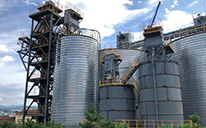
Spiral-Flanged Steel Silos: Spiral-flanged steel silos utilize spiral-flanging technology, forming the silo body from steel plates through a flanged edge process. This offers high flexibility and adaptability. Spiral-flanged silos are suitable for storing small to medium-sized materials, are easy to install, and offer relatively low cost for bulk materials such as fly ash.
Small Welded Silos: Constructed from welded steel plates, these silos are suitable for storing relatively small quantities of material. They are structurally robust and offer excellent sealing. This type of silo is typically used for storing small batches of fly ash requiring long-term stable storage, effectively preventing dust leakage and ensuring material quality.
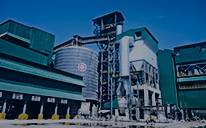
Large Welded Silos: Generally suitable for storing large quantities of fly ash. They have strong load-bearing capacity, better sealing, and can hold large amounts of material. This type of silo is commonly found in large coal-fired power plants, steel mills, and other industrial sites, meeting the storage needs of large quantities of fly ash and ensuring production continuity and safety.
1. Fully Enclosed Structure for High-Standard Environmental Control
The steel silo features a fully enclosed design and can be equipped with a high-efficiency dust removal system: effectively preventing fly ash leakage, meeting national and local environmental emission standards, and significantly improving the plant’s working environment. This is one of the most critical advantages for powdery materials.
2. Superior Moisture Resistance for Stable Material Quality
The steel silo possesses excellent sealing and moisture-proof capabilities: avoiding the influence of air humidity, preventing fly ash from clumping and hardening, and maintaining good fluidity and activity.
This is especially crucial for fly ash that needs to be reused (such as cement admixtures), where quality stability is paramount.

3. Professional Fluidization Design to Solve Discharge Problems
To address the problem of fly ash arching, steel silos are typically equipped with:
A conical silo bottom structure
Aeration plates (air fluidization system)
Vibration or pneumatic arch-breaking devices
Through the principle of pneumatic fluidization, the powder is made into a “fluidized” state, achieving uniform and smooth discharge.
4. High level of automation, enabling intelligent management
Modern fly ash steel silo systems typically integrate: automatic conveying and loading/unloading systems, material level monitoring systems, temperature and humidity monitoring systems, and PLC intelligent control systems. This achieves full automation from silo entry and storage to silo exit, significantly reducing labor costs.
5. Safe and reliable, stable operation
The steel silo structure design meets engineering safety standards: strong wind and earthquake resistance; prevents silo deformation and structural failure; and is equipped with a safety monitoring system to reduce operational risks, which is especially important for large-scale storage systems.
6. Small footprint, fast construction, and high return on investment
The three-dimensional structure saves a significant amount of land resources, modular construction shortens the construction period, and it is highly scalable, adapting to capacity growth. From a long-term operational perspective, the overall cost is significantly better than traditional methods.

Comparison of Steel Silos with Other Storage Methods
| Indicators | Steel Silo Storage | Concrete Silo | Open Storage Yard |
| Sealing Performance | High | Medium | Low |
| Environmental Performance | Excellent | Average | Poor |
| Automation Level | High | Medium | Low |
| Construction Period | Short | Long | Short |
| Maintenance Cost | Low | High | High |
| Overall Benefits | Excellent | Medium | Low |

Client Case: China Salt Inner Mongolia Fly Ash Silo Project
This project involved the procurement and installation of steel silos for the technical upgrade of ultrafine fly ash for China Salt Inner Mongolia Building Materials Co., Ltd. The steel silo diameter was φ15m, the total height was 11.9m, the effective volume was 1800m³, and the storage capacity was 1260t. The large diameter of the steel silos in this project, coupled with high installation precision requirements and the inability to construct on existing foundations, significantly increased the construction difficulty.
Based on the project’s quality and schedule requirements and the actual conditions, our company developed a reasonable installation schedule, ultimately completing the project half a month ahead of schedule and successfully passing the final acceptance inspection.

In the crucial of “fly ash storage,” traditional methods can no longer meet the dual demands of environmental protection and efficiency. “Fly ash silos” (steel silo storage), with their advantages of being airtight and environmentally friendly, moisture-proof and stable, highly automated, safe to operate, and cost-effective, have become an inevitable choice for industry upgrading. For enterprises committed to improving resource utilization and achieving green development, building modern fly ash steel silo systems is not only an equipment upgrade but also a significant step towards high-quality development.