





Key design considerations for Large Welded Steel Silo
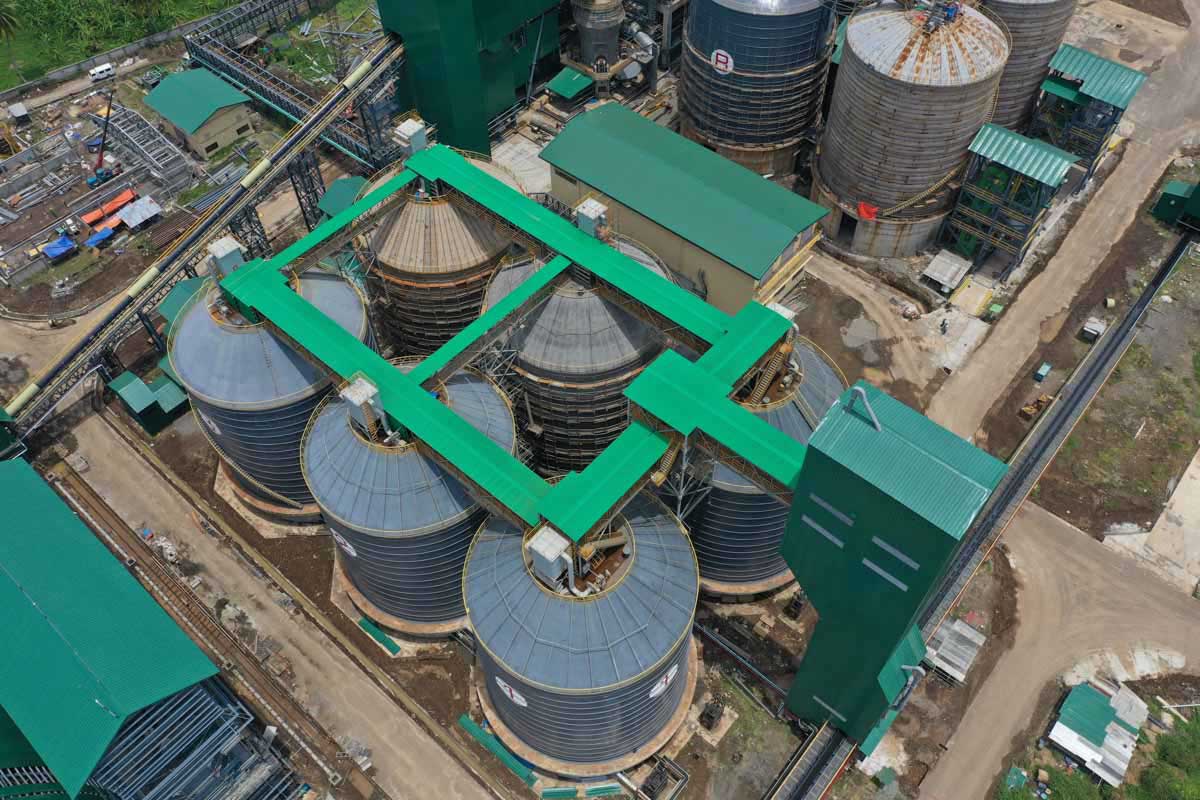
With the development of industrial production and logistics, the demand for bulk material storage is constantly increasing, leading to the widespread application of large and extra-large steel silos. Compared to small steel silos, Large Welded Steel Silo have larger storage capacities, greater heights, more complex structural designs, and significantly higher requirements for safety and reliability.
Key considerations in the structural design of Large Welded Steel Silo include load analysis, the application of circumferential and vertical reinforcement, and the design optimization characteristics of Large Welded Steel Silo.
I. Load Analysis of Large Welded Steel Silo
As storage equipment, the structural design of steel silos must comprehensively consider various loads and their combined effects. The main loads can be categorized as follows:
1. Permanent Loads
Permanent loads mainly include the weight of the steel silo structure itself and the weight of fixed equipment. In Large Welded Steel Silo, the silo height and plate thickness are significant, and the vertical pressure exerted by their own weight on the silo structure cannot be ignored. Reasonable calculation of permanent loads is fundamental to ensuring the structural safety of the silo.
2. Live Loads
Live loads mainly include the loads from personnel and equipment moving on the roof, the maintenance load on the silo roof platform, and the ash accumulation load. Especially during maintenance or repair, live loads have a significant impact on the silo roof structure, requiring sufficient strength and rigidity for the roof components.
3. Storage Loads
Storage loads are the most important controlling factor in the structural design of Large Welded Steel Silo The storage of bulk materials generates lateral pressure on the silo walls, accompanied by vertical friction. The prolonged and continuous action of stored material loads is a key factor affecting the stress and deformation of the silo walls. Insufficient silo wall strength can lead to cracking, buckling, or even instability.
4. Wind Load
Wind loads in Large Welded Steel Silo manifest as radial pressure on the walls, generating vertical bending and overall horizontal shear forces. Especially in strong winds, tall silos are prone to bending deformation; inadequate design of circumferential and vertical reinforcement can lead to localized or overall instability.
5. Seismic Action
Seismic loads have a particularly significant dynamic effect on Large Welded Steel Silo. During an earthquake, the combined effect of the stored material load and the silo’s own weight generates substantial inertial forces. Silo design must fully consider seismic loads and their combined effects with other loads to ensure the structure’s safety and stability under seismic conditions.
6. Snow Load
In high-latitude or snowy regions, snow load on the silo roof exerts additional pressure on the roof and circumferential structure. Therefore, the combined effect of the roof stiffening structure and snow load must be considered in the design.
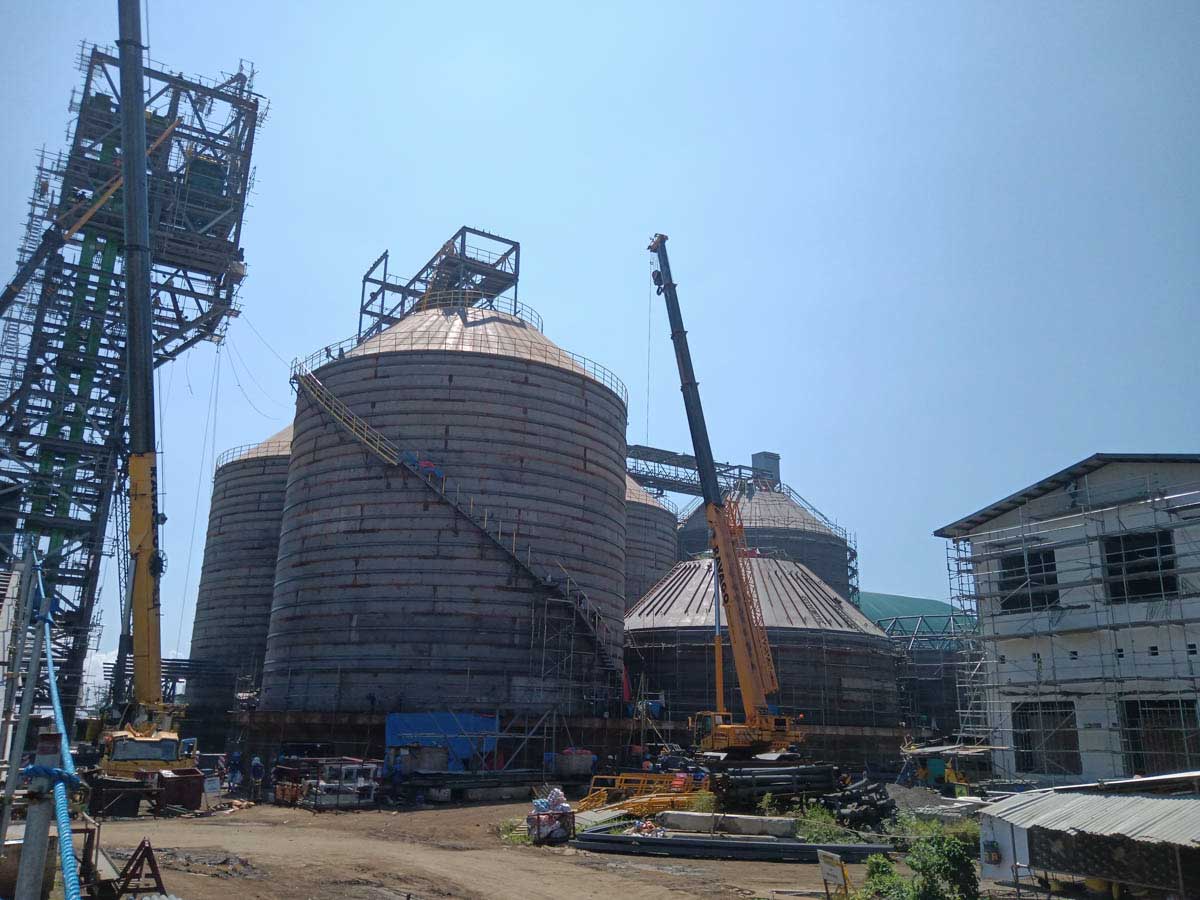
In summary, the load design requirements for Large Welded Steel Silo comprehensively consider the combined effects of long-term and short-term loads, as well as static and dynamic loads, to ensure the overall safety and reliability of the silo structure.
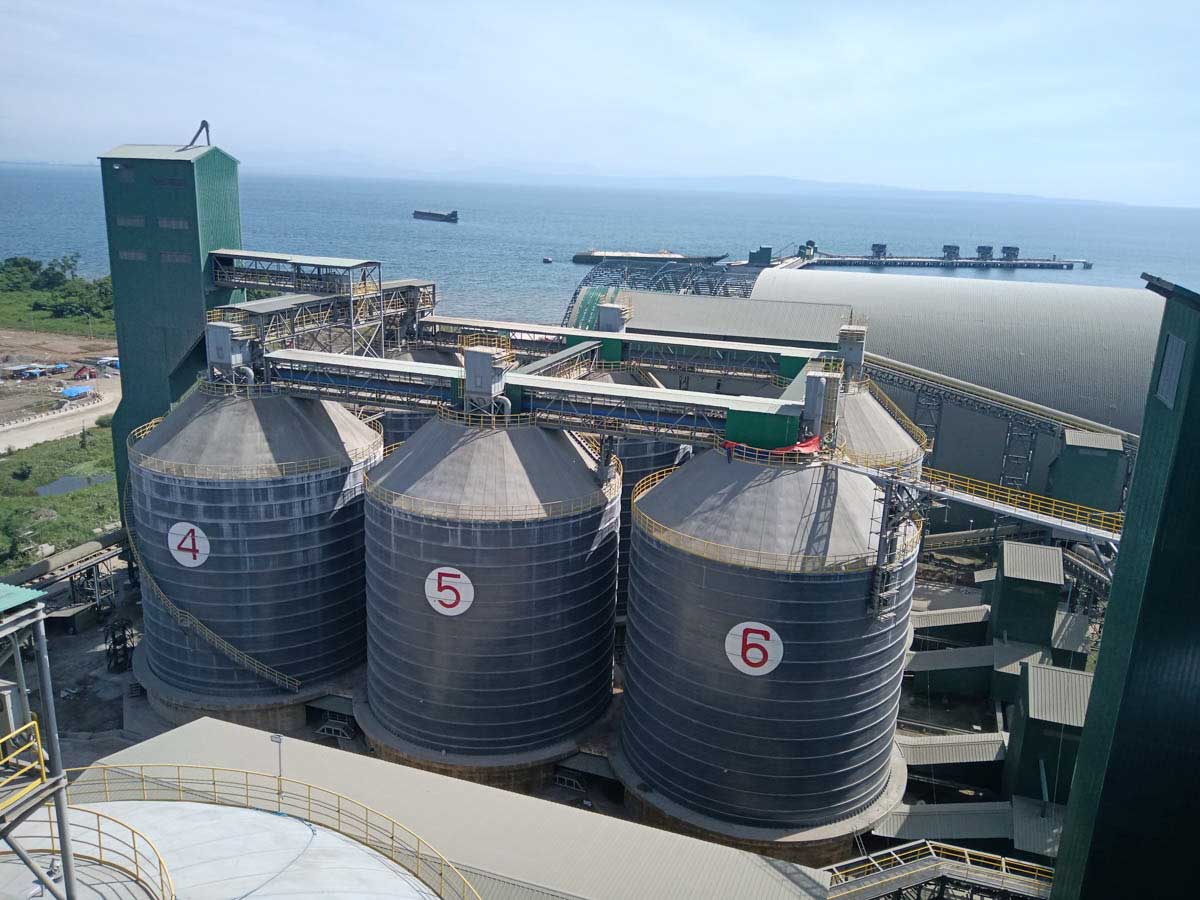
II. The Role of Circumferential and Vertical Reinforcement in Large Welded Steel Silo
Large Welded Steel Silo are typical thin-walled structures. Simply increasing the thickness of the plates to resist lateral pressure from stored materials and wind loads is not economical. Engineering practice has proven that adding circumferential and vertical reinforcement is an effective measure to improve the strength and stiffness of the silo structure.
1. Role of Circumferential Reinforcement
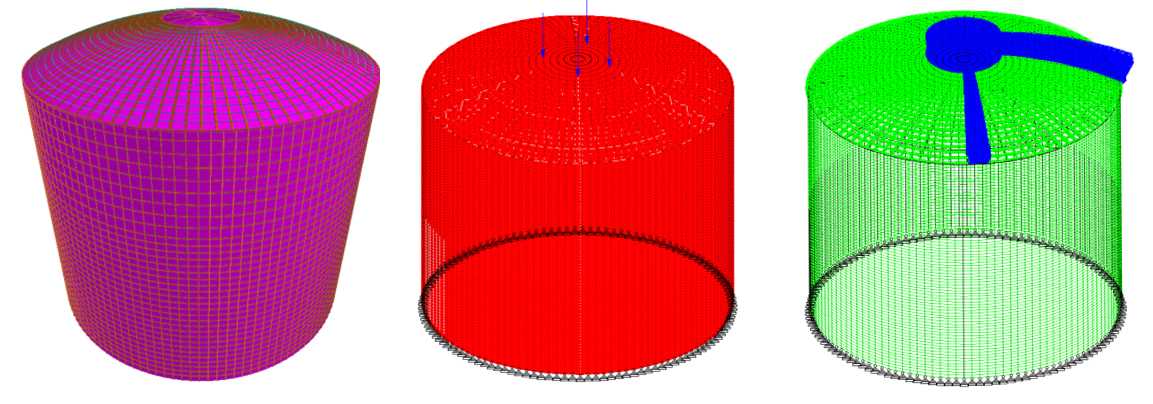
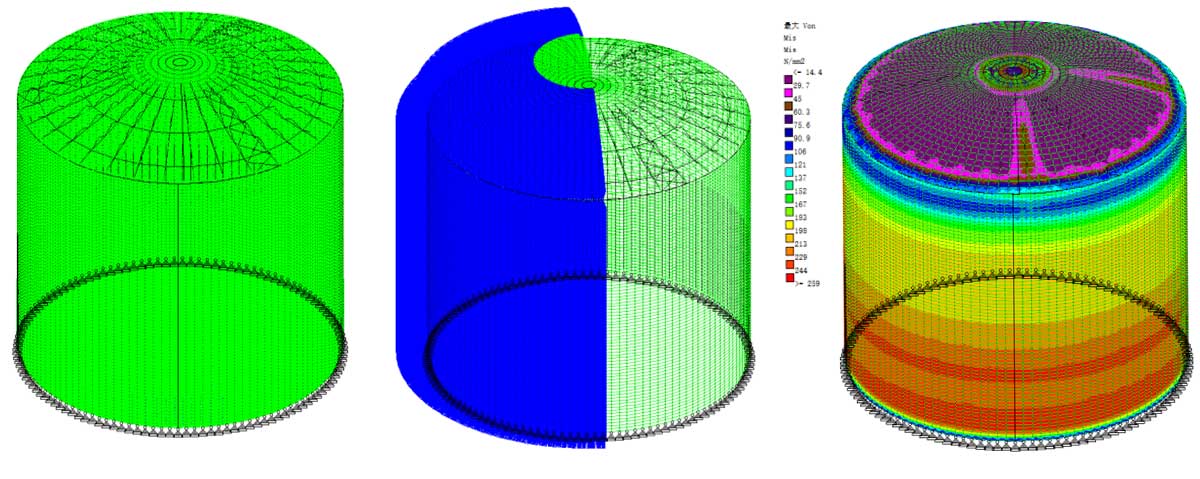
Circumferential reinforcement is arranged circumferentially along the silo wall, effectively dispersing lateral pressure from stored materials and enhancing the silo wall’s bending resistance. Finite element analysis shows that under the same load conditions, adding circumferential reinforcement reduces the maximum stress in the silo from 355 MPa to 274 MPa, significantly improving the silo wall’s load-bearing capacity.
2. Role of Vertical Reinforcement
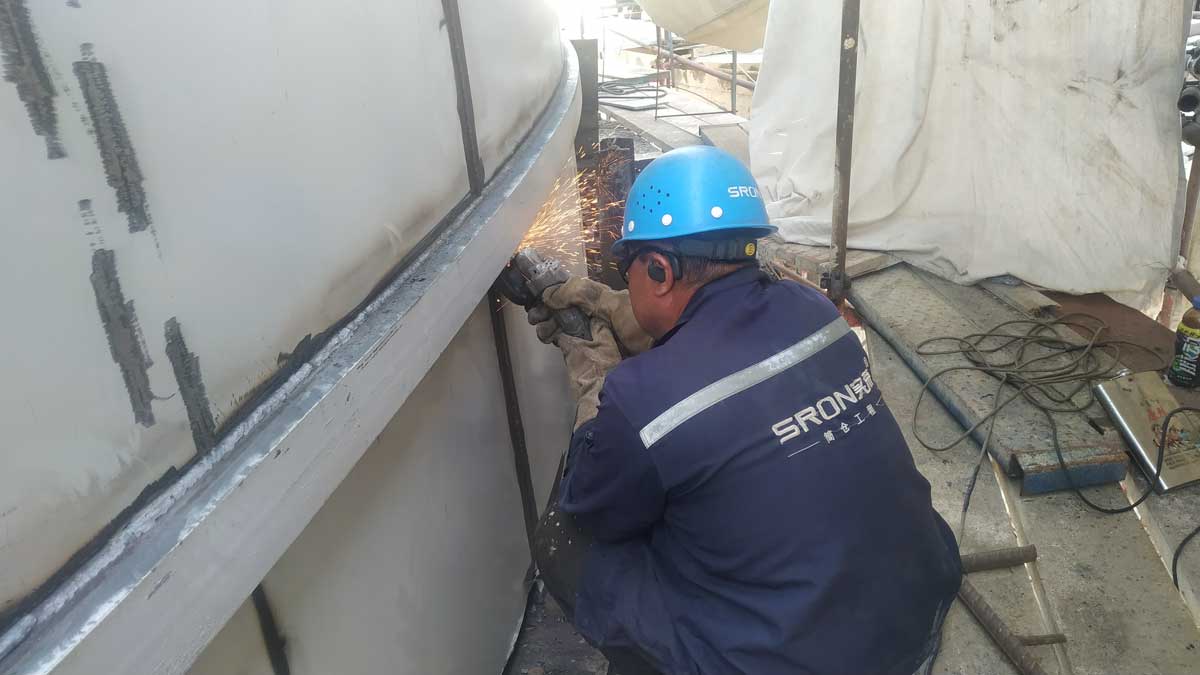
Vertical reinforcement is arranged along the height of the silo, primarily resisting the vertical frictional force of the stored materials. It also has strong resistance to bending and shear forces caused by wind loads. The application of vertical reinforcement not only reduces silo wall deformation but also improves overall seismic performance and structural stability.
3. Combined Effect of Circular and Vertical Reinforcement
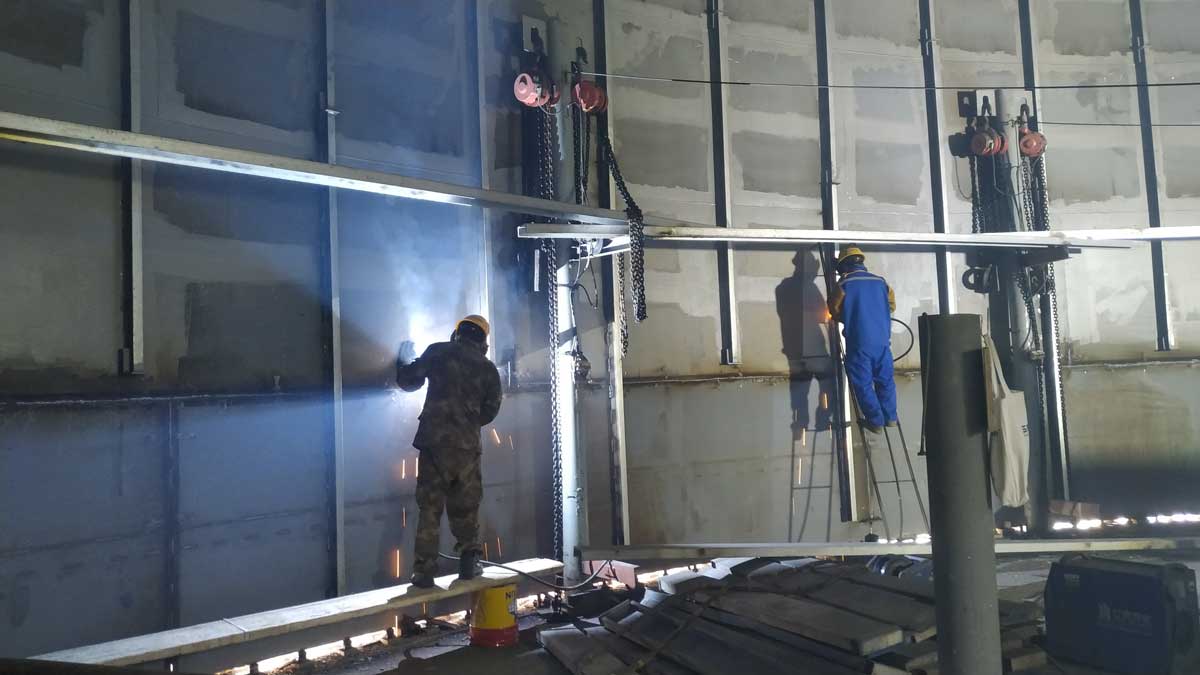
The combined arrangement of circumferential and vertical reinforcement can significantly reduce the stress level of the silo structure, decrease the deformation of the silo wall under dynamic loads such as wind and seismic loads, and ensure the structural safety of the silo under extreme conditions. The reinforcement materials of channel steel or section steel have superior tensile, bending, and shear resistance. Compared with simply thickening the plate, this not only saves materials but also achieves economical and safe structural optimization.
III. Design Optimization Features of Large Welded Steel Silo
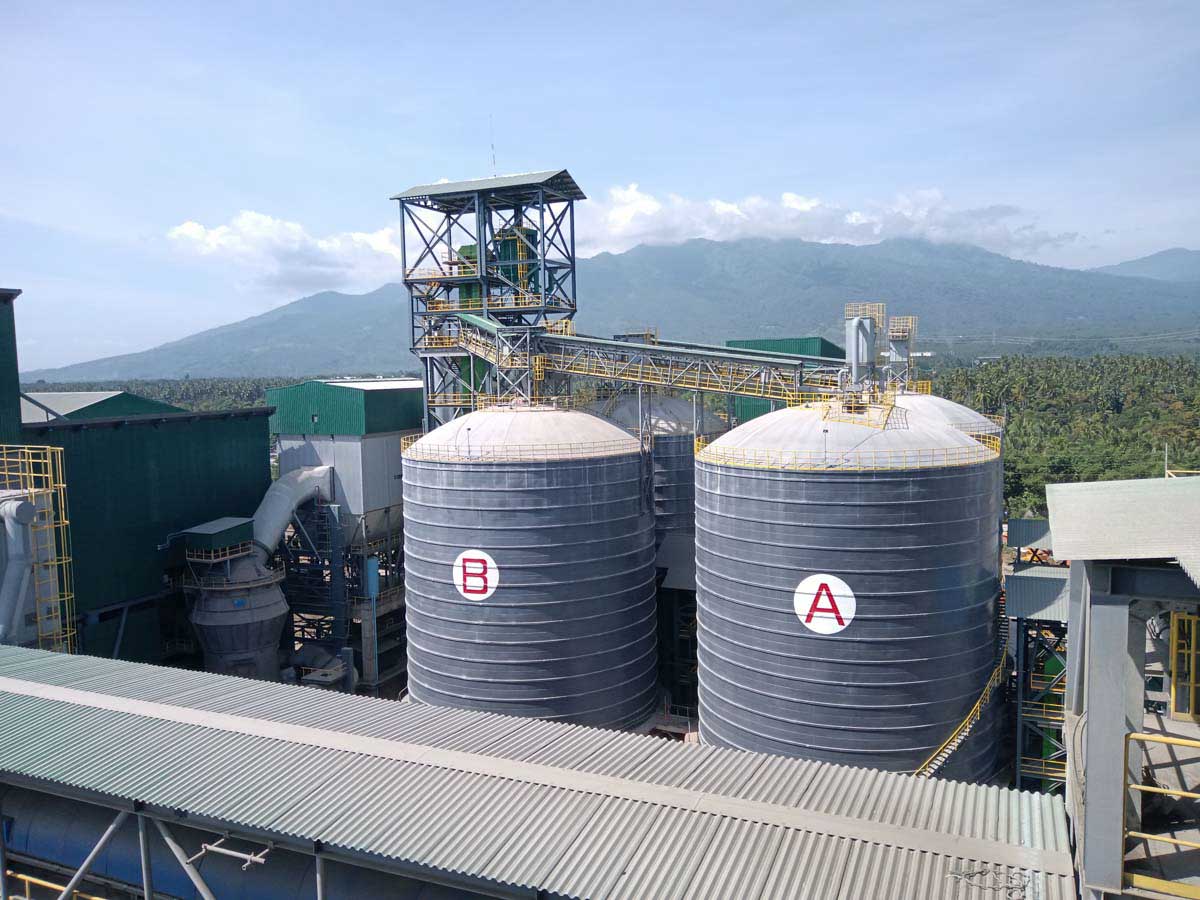
1. Material Saving and Structural Safety: The combined design of ring reinforcement, vertical reinforcement, and steel plates ensures the strength and rigidity of the silo while saving significant amounts of sheet metal and construction costs.
2. Improved Seismic Resistance: The stiffening effect of ring and vertical reinforcement enhances the silo’s resistance to deformation and instability under earthquakes and wind loads.
3. Adaptability to Various Working Conditions: Under live loads, snow loads, and wind pressure, the stiffened design of the silo roof and walls ensures the overall safe operation of the silo.
4. Optimized Structural Layout: Through finite element analysis, the spacing, cross-section, and arrangement of reinforcement are rationally determined to achieve uniform stress distribution and minimize deformation.
5. Internationally Verified: This combined design method of “steel plate + ring reinforcement + vertical reinforcement” has been widely adopted after years of engineering practice both domestically and internationally, and is a mature solution for the design of Large Welded Steel Silo
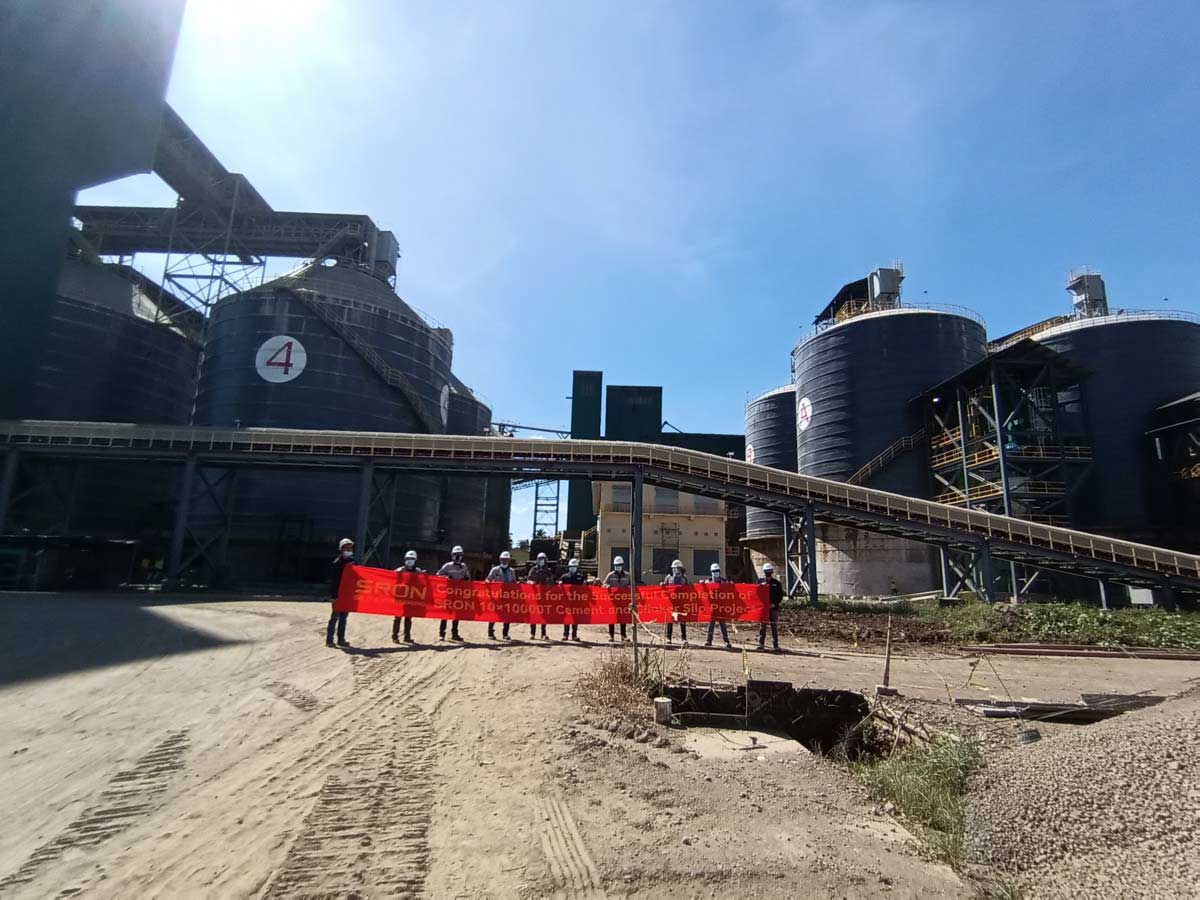
The core of large steel silo structural design lies in rationally handling various loads, optimizing the silo wall structure, and improving overall stiffness and stability. By adding circumferential and vertical ribs, steel silos can effectively reduce stress levels, minimize deformation, and improve seismic performance, achieving economical and safe design goals. In the future, with the development of engineering technology and materials science, the application of Large Welded Steel Silo in various industrial storage and transportation fields will become more widespread, and their design concepts and optimization methods will continue to improve, providing more reliable and efficient solutions for industrial storage.
Key considerations in the structural design of Large Welded Steel Silo include load analysis, the application of circumferential and vertical reinforcement, and the design optimization characteristics of Large Welded Steel Silo.
I. Load Analysis of Large Welded Steel Silo
As storage equipment, the structural design of steel silos must comprehensively consider various loads and their combined effects. The main loads can be categorized as follows:
1. Permanent Loads
Permanent loads mainly include the weight of the steel silo structure itself and the weight of fixed equipment. In Large Welded Steel Silo, the silo height and plate thickness are significant, and the vertical pressure exerted by their own weight on the silo structure cannot be ignored. Reasonable calculation of permanent loads is fundamental to ensuring the structural safety of the silo.
2. Live Loads
Live loads mainly include the loads from personnel and equipment moving on the roof, the maintenance load on the silo roof platform, and the ash accumulation load. Especially during maintenance or repair, live loads have a significant impact on the silo roof structure, requiring sufficient strength and rigidity for the roof components.
3. Storage Loads
Storage loads are the most important controlling factor in the structural design of Large Welded Steel Silo The storage of bulk materials generates lateral pressure on the silo walls, accompanied by vertical friction. The prolonged and continuous action of stored material loads is a key factor affecting the stress and deformation of the silo walls. Insufficient silo wall strength can lead to cracking, buckling, or even instability.
4. Wind Load
Wind loads in Large Welded Steel Silo manifest as radial pressure on the walls, generating vertical bending and overall horizontal shear forces. Especially in strong winds, tall silos are prone to bending deformation; inadequate design of circumferential and vertical reinforcement can lead to localized or overall instability.
5. Seismic Action
Seismic loads have a particularly significant dynamic effect on Large Welded Steel Silo. During an earthquake, the combined effect of the stored material load and the silo’s own weight generates substantial inertial forces. Silo design must fully consider seismic loads and their combined effects with other loads to ensure the structure’s safety and stability under seismic conditions.
6. Snow Load
In high-latitude or snowy regions, snow load on the silo roof exerts additional pressure on the roof and circumferential structure. Therefore, the combined effect of the roof stiffening structure and snow load must be considered in the design.
In summary, the load design requirements for Large Welded Steel Silo comprehensively consider the combined effects of long-term and short-term loads, as well as static and dynamic loads, to ensure the overall safety and reliability of the silo structure.
II. The Role of Circumferential and Vertical Reinforcement in Large Welded Steel Silo
Large Welded Steel Silo are typical thin-walled structures. Simply increasing the thickness of the plates to resist lateral pressure from stored materials and wind loads is not economical. Engineering practice has proven that adding circumferential and vertical reinforcement is an effective measure to improve the strength and stiffness of the silo structure.
1. Role of Circumferential Reinforcement
Circumferential reinforcement is arranged circumferentially along the silo wall, effectively dispersing lateral pressure from stored materials and enhancing the silo wall’s bending resistance. Finite element analysis shows that under the same load conditions, adding circumferential reinforcement reduces the maximum stress in the silo from 355 MPa to 274 MPa, significantly improving the silo wall’s load-bearing capacity.
2. Role of Vertical Reinforcement
Vertical reinforcement is arranged along the height of the silo, primarily resisting the vertical frictional force of the stored materials. It also has strong resistance to bending and shear forces caused by wind loads. The application of vertical reinforcement not only reduces silo wall deformation but also improves overall seismic performance and structural stability.
3. Combined Effect of Circular and Vertical Reinforcement
The combined arrangement of circumferential and vertical reinforcement can significantly reduce the stress level of the silo structure, decrease the deformation of the silo wall under dynamic loads such as wind and seismic loads, and ensure the structural safety of the silo under extreme conditions. The reinforcement materials of channel steel or section steel have superior tensile, bending, and shear resistance. Compared with simply thickening the plate, this not only saves materials but also achieves economical and safe structural optimization.
III. Design Optimization Features of Large Welded Steel Silo
1. Material Saving and Structural Safety: The combined design of ring reinforcement, vertical reinforcement, and steel plates ensures the strength and rigidity of the silo while saving significant amounts of sheet metal and construction costs.
2. Improved Seismic Resistance: The stiffening effect of ring and vertical reinforcement enhances the silo’s resistance to deformation and instability under earthquakes and wind loads.
3. Adaptability to Various Working Conditions: Under live loads, snow loads, and wind pressure, the stiffened design of the silo roof and walls ensures the overall safe operation of the silo.
4. Optimized Structural Layout: Through finite element analysis, the spacing, cross-section, and arrangement of reinforcement are rationally determined to achieve uniform stress distribution and minimize deformation.
5. Internationally Verified: This combined design method of “steel plate + ring reinforcement + vertical reinforcement” has been widely adopted after years of engineering practice both domestically and internationally, and is a mature solution for the design of Large Welded Steel Silo
The core of large steel silo structural design lies in rationally handling various loads, optimizing the silo wall structure, and improving overall stiffness and stability. By adding circumferential and vertical ribs, steel silos can effectively reduce stress levels, minimize deformation, and improve seismic performance, achieving economical and safe design goals. In the future, with the development of engineering technology and materials science, the application of Large Welded Steel Silo in various industrial storage and transportation fields will become more widespread, and their design concepts and optimization methods will continue to improve, providing more reliable and efficient solutions for industrial storage.