




Applications and Advantages of Pneumatic Conveying for Cement and Fly Ash
In projects involving the production, storage, and transport of powdered materials—such as cement, concrete, and fly ash—the efficiency and stability of material transfer between locations directly impact the production line’s operational efficiency, energy consumption, and environmental performance. While traditional mechanical conveying equipment offers certain advantages for specific short-distance, high-volume applications, pneumatic conveying systems often prove superior when handling fine powders like cement and fly ash, particularly when requirements call for long-distance, elevated, enclosed, or multi-point transport.
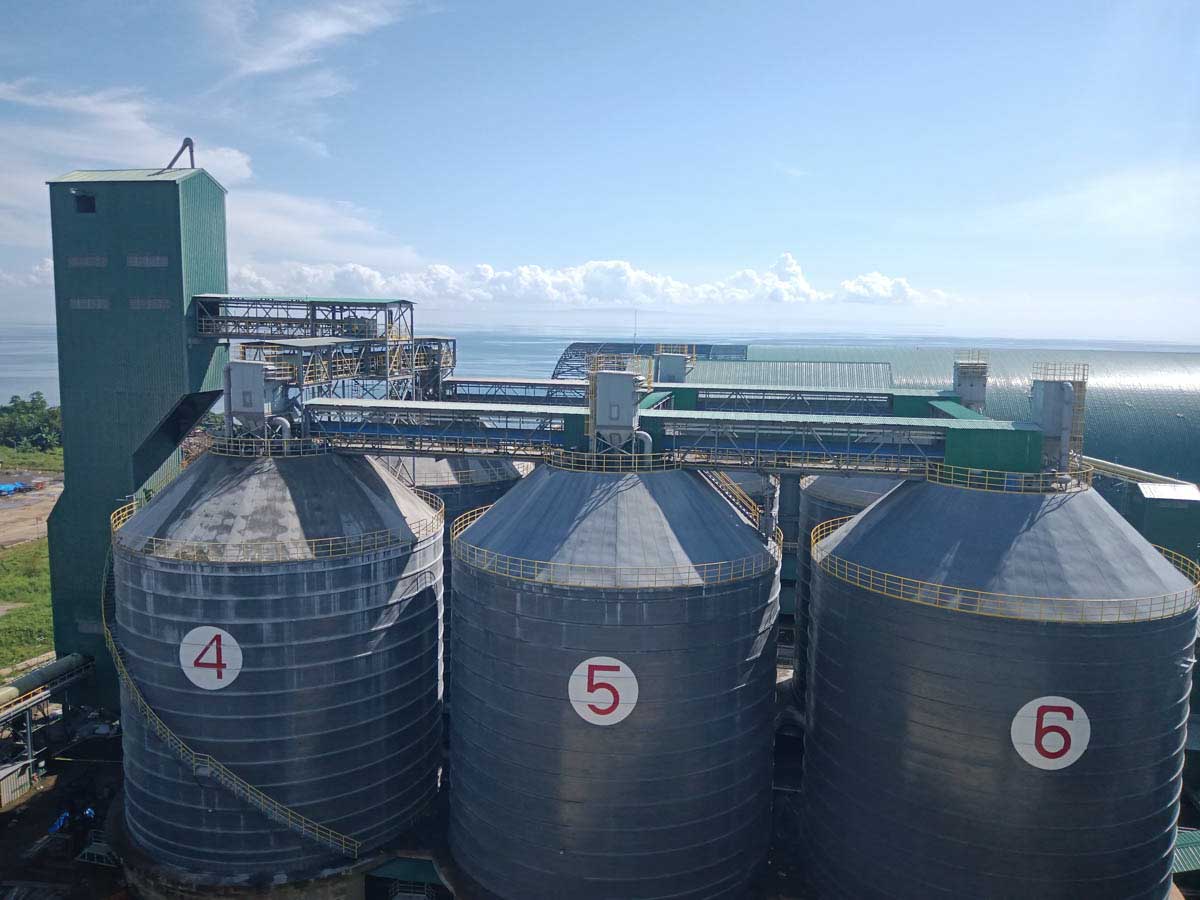
What is a pneumatic conveying system?
A pneumatic conveying system is a method of conveying materials—such as powders or granules—from one location to another through pipelines, using air or another gas as the conveying medium. For powdered materials like cement and fly ash, compressed air is typically used to generate the necessary motive force, propelling the powder through enclosed pipelines into storage silos, metering systems, or production equipment.
Compared to mechanical conveying methods such as belt conveyors or bucket elevators, the primary advantages of pneumatic conveying are that materials are conveyed within enclosed pipelines, equipment layout is flexible, the system has a small footprint, and it can adapt to complex spatial configurations. Consequently, pneumatic conveying systems have become a common solution for powder transport in modern cement and powder processing projects.
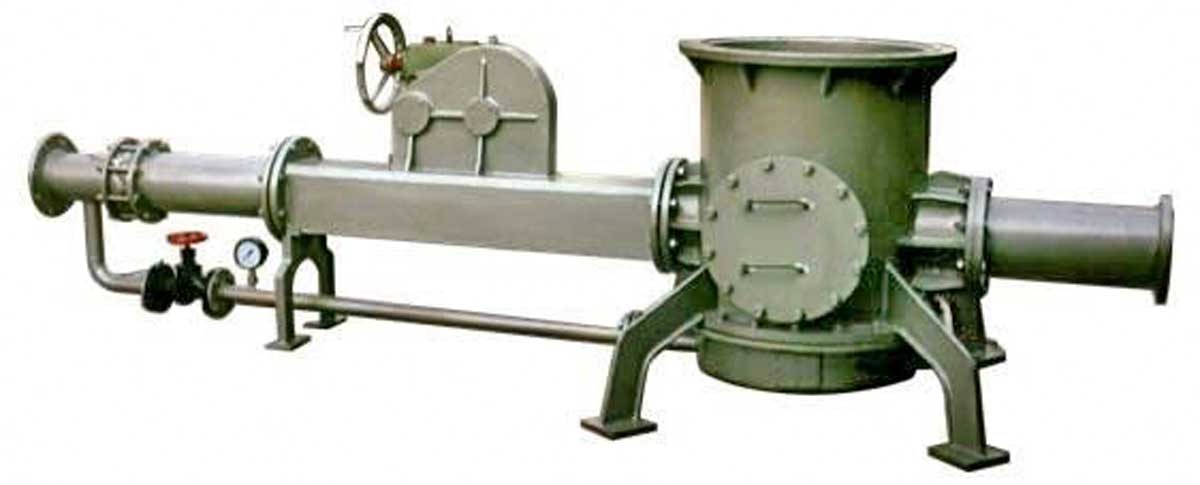
Why are cement and fly ash suitable for pneumatic conveying?
When selecting a conveying method, the properties of the material itself must be considered first. Both cement and fly ash are typical powdery materials characterized by fine particle size, a tendency to generate dust, and flowability that is affected by moisture content.
Using open mechanical equipment for transfer often leads to dust generation during material discharge, lifting, and unloading; this not only impacts the production environment but also places an increased load on dust collection systems. In contrast, pneumatic conveying keeps the material within a sealed pipeline throughout the process, thereby minimizing direct contact between the powder and the external environment. This is particularly advantageous for fly ash handling—such as transferring it from storage silos to concrete production lines, grinding systems, or other storage units—as pneumatic conveying effectively meets the requirements for sealed, continuous powder transport.
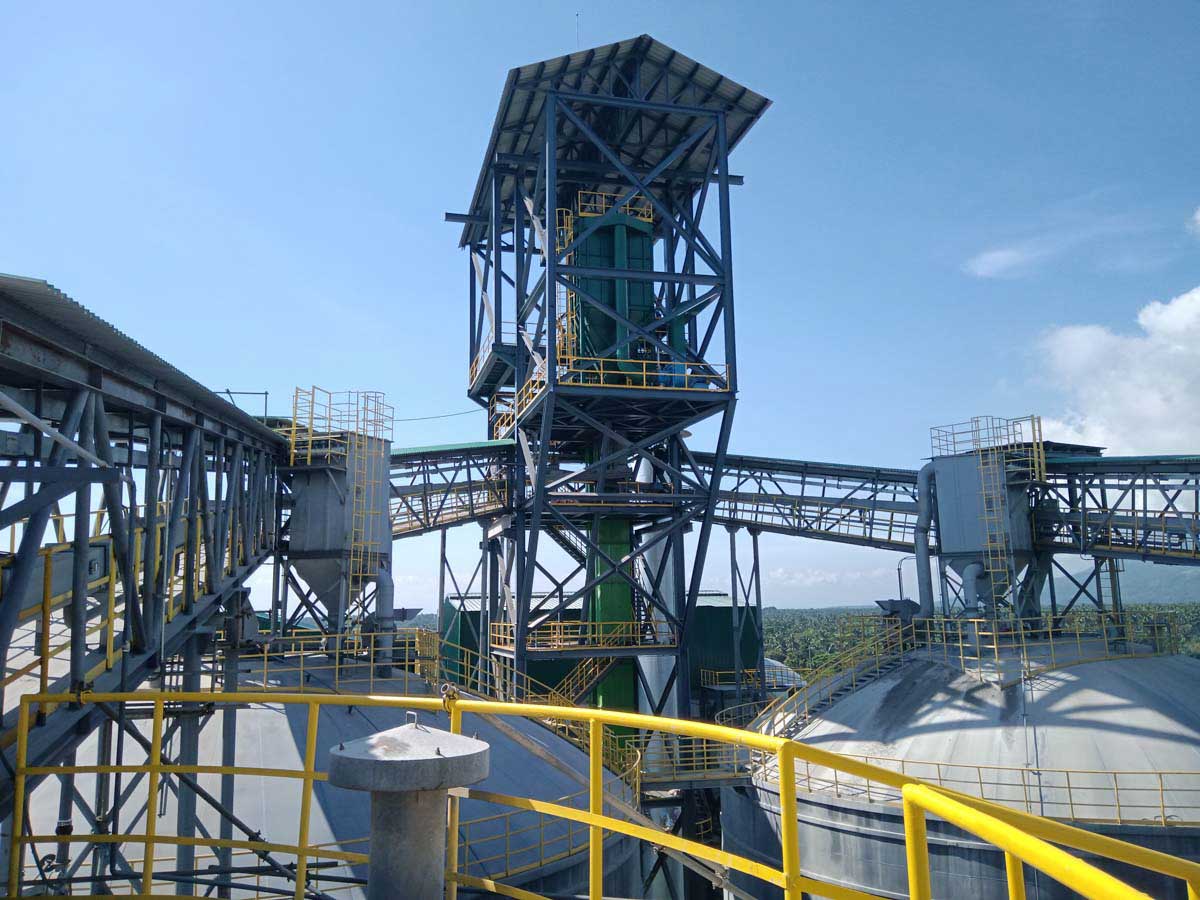
When is a pneumatic conveying system the preferred choice?
Pneumatic conveying is not required for every powder transport project; the decision to use it depends on specific operating conditions.
1. When conveying over long distances
When transporting materials like fly ash or cement from storage silos to distant production equipment, pipeline conveying eliminates the need for intermediate transfer points often required by traditional mechanical systems.
This is particularly advantageous in large-scale cement plants, fly ash utilization projects, production lines, and concrete production facilities, where equipment spacing and spatial layouts are often complex. Pneumatic conveying pipelines offer excellent engineering adaptability, as they can be routed horizontally, vertically, or with spatial turns to suit site conditions.
2. When vertical lifting is required
If materials must be transported from a low level to an elevated silo, traditional mechanical conveying often requires equipment such as bucket elevators or belt conveyors.
In contrast, pneumatic conveying can transport powders to significant heights directly through pipelines. For projects requiring the transfer of cement or fly ash into elevated storage silos, this method reduces the need for intermediate conveying equipment, resulting in a more compact system structure.
3. When strict containment is required
This is a critical application scenario for pneumatic conveying. Cement and fly ash are materials prone to generating dust. For manufacturing facilities with high standards regarding workshop environments, dust control, and environmental compliance, enclosed conveying minimizes material exposure.
Pneumatic conveying systems transport materials through sealed pipelines and can be integrated with dust collection equipment, storage silos, and automated control systems. Consequently, pneumatic conveying is often a highly attractive option for modern powder handling projects with stringent environmental requirements.
4. When equipment layout space is limited
Large-scale mechanical conveying equipment typically requires significant installation space, whereas the core component of a pneumatic conveying system is simply the pipeline.
When space between factory buildings or equipment is restricted, or when the conveying route involves crossings, turns, or changes in elevation, pipeline-based conveying offers greater layout flexibility. This is particularly important for retrofit projects in older facilities.
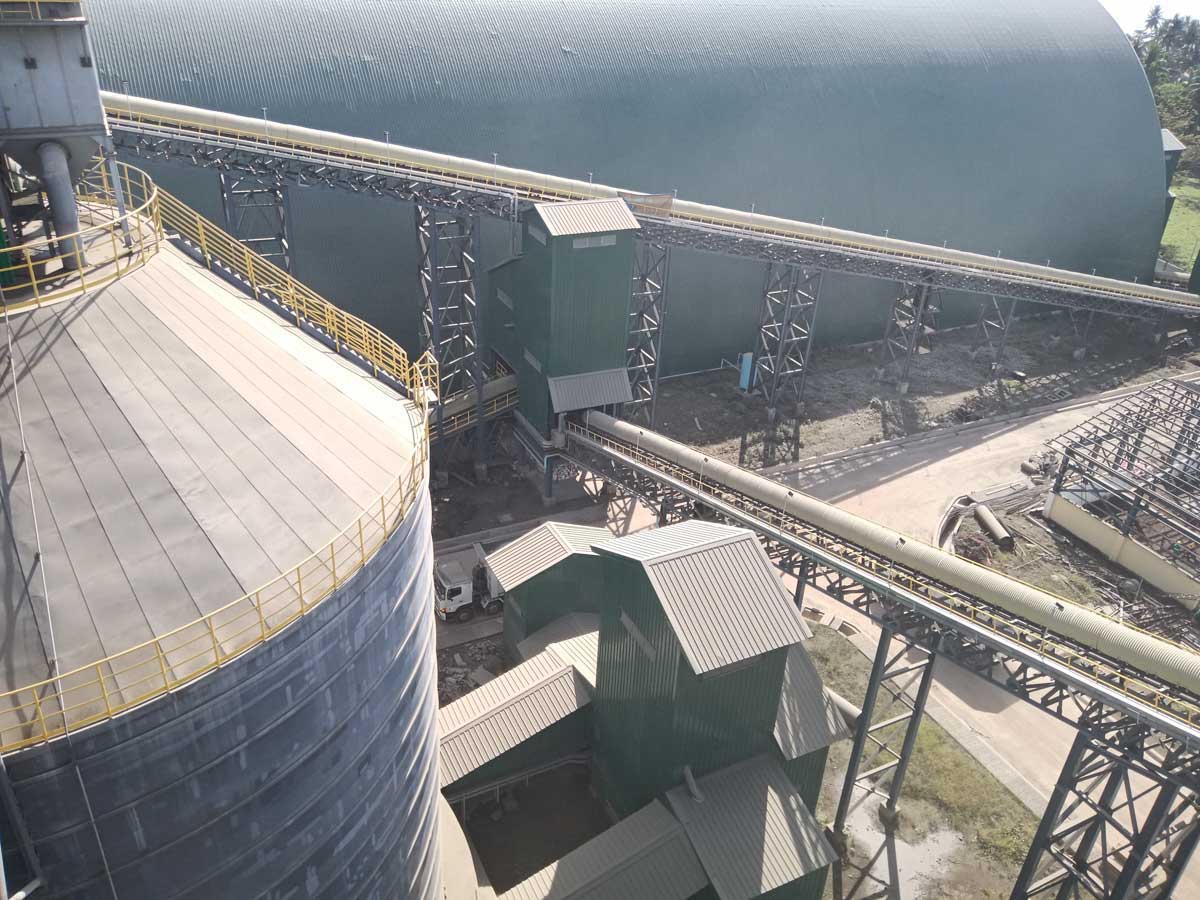
Why is pneumatic conveying frequently used for fly ash transport?
Fly ash is an industrial solid by-product of coal-fired power plants and a common additive in the concrete, building materials, and cement industries. It typically requires collection, storage, convey, and metering before entering subsequent production stages. Frequent transfer using manual methods or open mechanical systems is not only complex to operate but also prone to dust emissions. Therefore, in fly ash utilization projects, a suitable pneumatic conveying scheme can be selected based on factors such as conveying distance, throughput, and the physical state of the fly ash.
A typical process flow can be described as follows:
Fly ash silo → Conveying unit → Conveying pipeline → Separation/collection equipment → Fly ash storage silo or metering equipment. The entire process takes place within a relatively enclosed environment, which helps enhance the level of automation in fly ash transport.
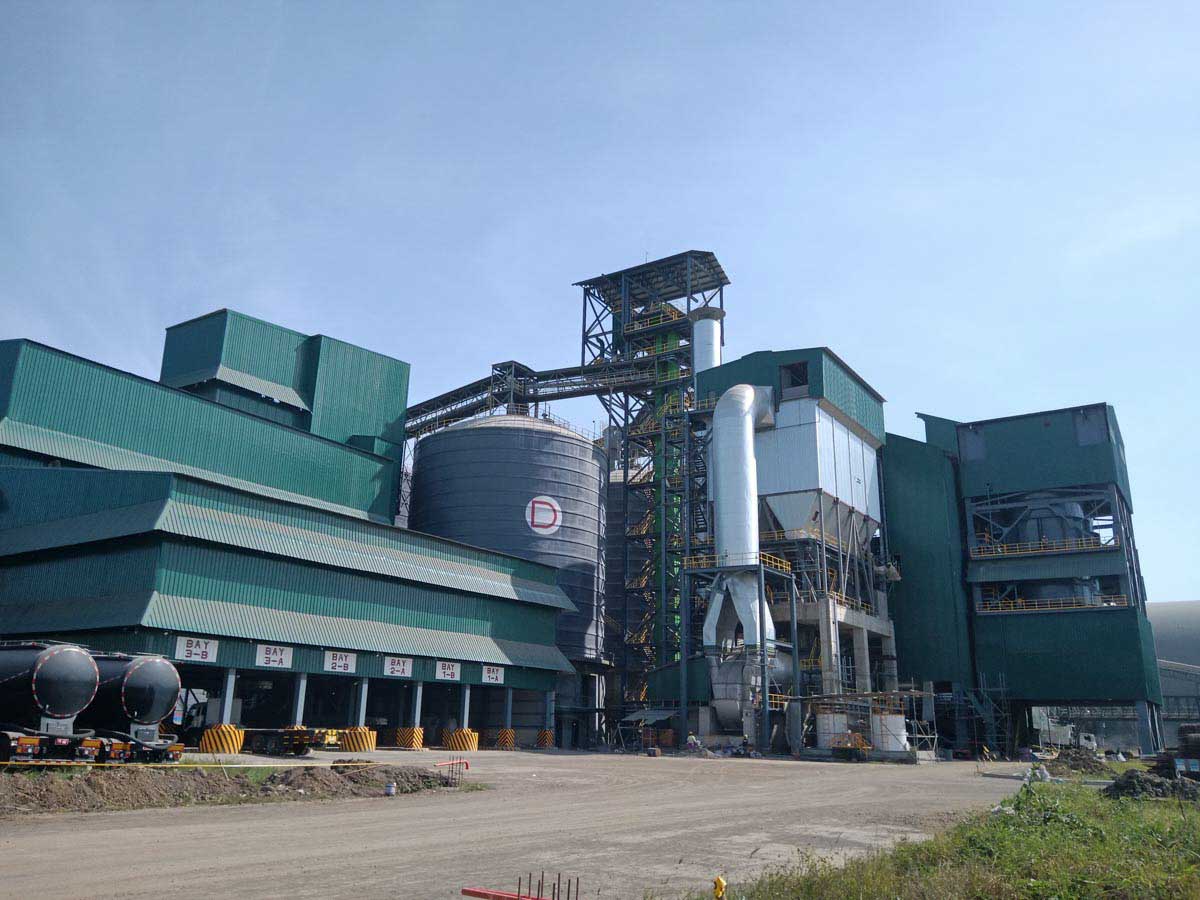
What are the advantages of pneumatic conveying for cement?
Cement is a typical fine powder and a key material handled by pneumatic conveying systems. In facilities such as concrete batching plants, cement plants, precast component factories, and dry-mixed mortar production lines, cement frequently needs to be transported from storage silos to metering bins or other processing equipment. Pneumatic conveying offers the following advantages:
Excellent containment: Transporting cement through pipelines minimizes the release of dust into the production environment.
Flexible routing: Pipelines can be strategically routed based on site conditions, accommodating various heights and spatial configurations.
High level of automation: Pneumatic conveying systems can be integrated with level sensors, valves, pressure monitoring devices, and automated control systems to enable automatic start/stop functions and flow control.
Relatively small footprint: Compared to certain mechanical conveying methods, pneumatic conveying relies primarily on pipelines to connect equipment, thereby reducing the space occupied by large-scale conveying machinery.
What key factors should be considered when selecting a pneumatic conveying system?
1. Selection based on material characteristics
Although cement and fly ash are both classified as powders, their parameters—such as particle size, density, moisture content, and flowability—differ. Therefore, one cannot simply use the same set of parameters to design systems for all projects.
2. Determining equipment specifications based on conveying capacity
The project’s hourly conveying capacity is a crucial basis for equipment selection. Insufficient capacity hampers production efficiency, while oversized equipment can lead to higher initial investment and increased energy consumption during operation.
3. Pipeline design based on conveying distance
Factors such as horizontal distance, vertical lift, the number of elbows, and pipe diameter all influence system resistance. Consequently, actual design requires calculations based on the complete conveying route, rather than selecting equipment based solely on straight-line distance.
4. Prioritizing dust collection and environmental design
While pneumatic conveying is a closed-system process, properly configured dust collection equipment is still essential at points such as silos, discharge stations, and gas-solid separation units. Only through the integrated design of the conveying and dust collection systems can stable, environmentally friendly powder conveying be truly achieved.
.jpg)
When selecting a conveying system for cement or fly ash projects, one should not simply aim for the most advanced equipment available; instead, the choice should be based on actual operating conditions. Pneumatic conveying systems are often highly advantageous for projects requiring long-distance conveying, vertical lifting, enclosed conveying, or operation within confined spaces, as well as those with strict environmental standards and high levels of automation. In particular, pneumatic systems for fly ash and cement integrate seamlessly with storage silos, dust collection equipment, metering systems, and automated controls.
For new cement or fly ash projects, it is advisable to conduct a comprehensive comparison—evaluating material properties, conveying capacity, distance, layout constraints, and operating costs—before deciding between pneumatic and mechanical conveying. Selecting an appropriate pneumatic conveying system does more than just solve the problem of moving powdered materials; it ensures the entire powder storage and conveying system operates with greater stability, efficiency, and environmental friendliness.