





Bulk Material Storage Solutions: Steel Silo, Enclosed Stockyard or Open Stockyard?
In industrial projects involving materials such as cement, fly ash, slag powder, aggregates, coal, ores, metallurgical raw materials, and chemical powders, the storage of bulk materials is a critical component of production line design. During the preliminary consultation phase, projects often face a practical dilemma: Should they choose steel silos, enclosed stockyards, or open stockyards?
While all three options are suitable for storing industrial bulk materials, they differ significantly in terms of material types, storage capacity, environmental requirements, automation levels, land footprint, and investment costs. Therefore, when selecting a bulk material storage solution, it is important not to focus solely on “which option is cheaper.” Instead, the decision should be based on a comprehensive assessment of factors such as material properties, storage scale, environmental requirements, material handling methods, automation capabilities, and long-term operational costs.
What are steel silos, enclosed stockyards, and open stockyards?
1. Steel Silos: Suitable for centralized, sealed, and automated storage
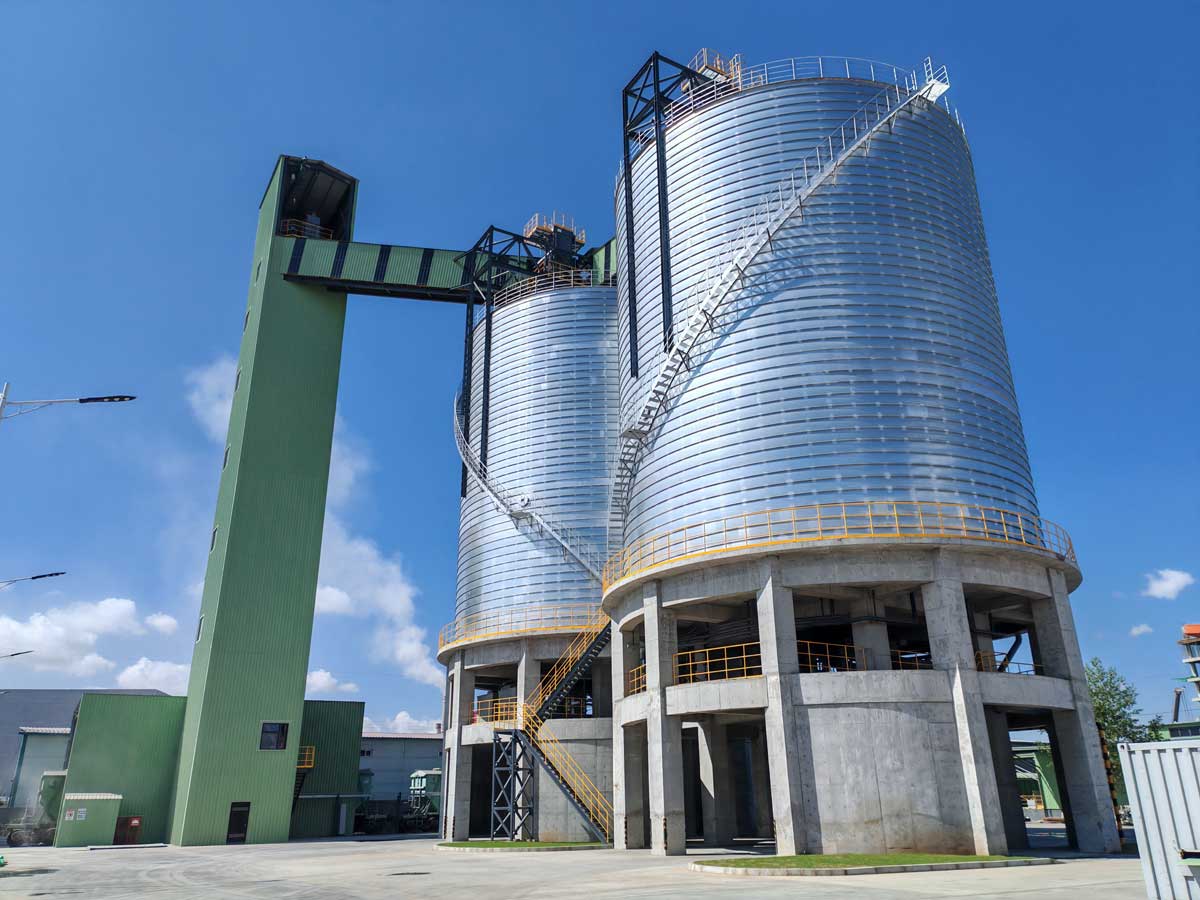
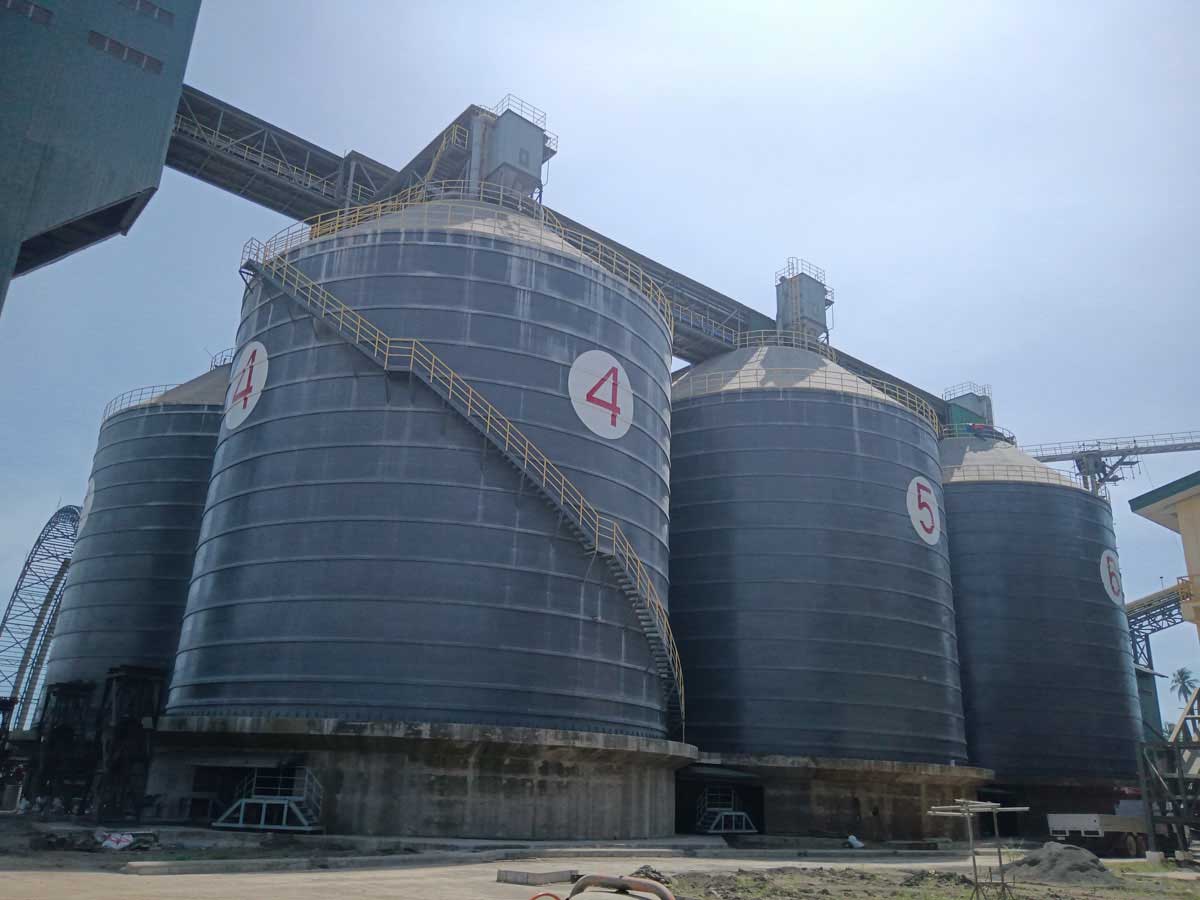
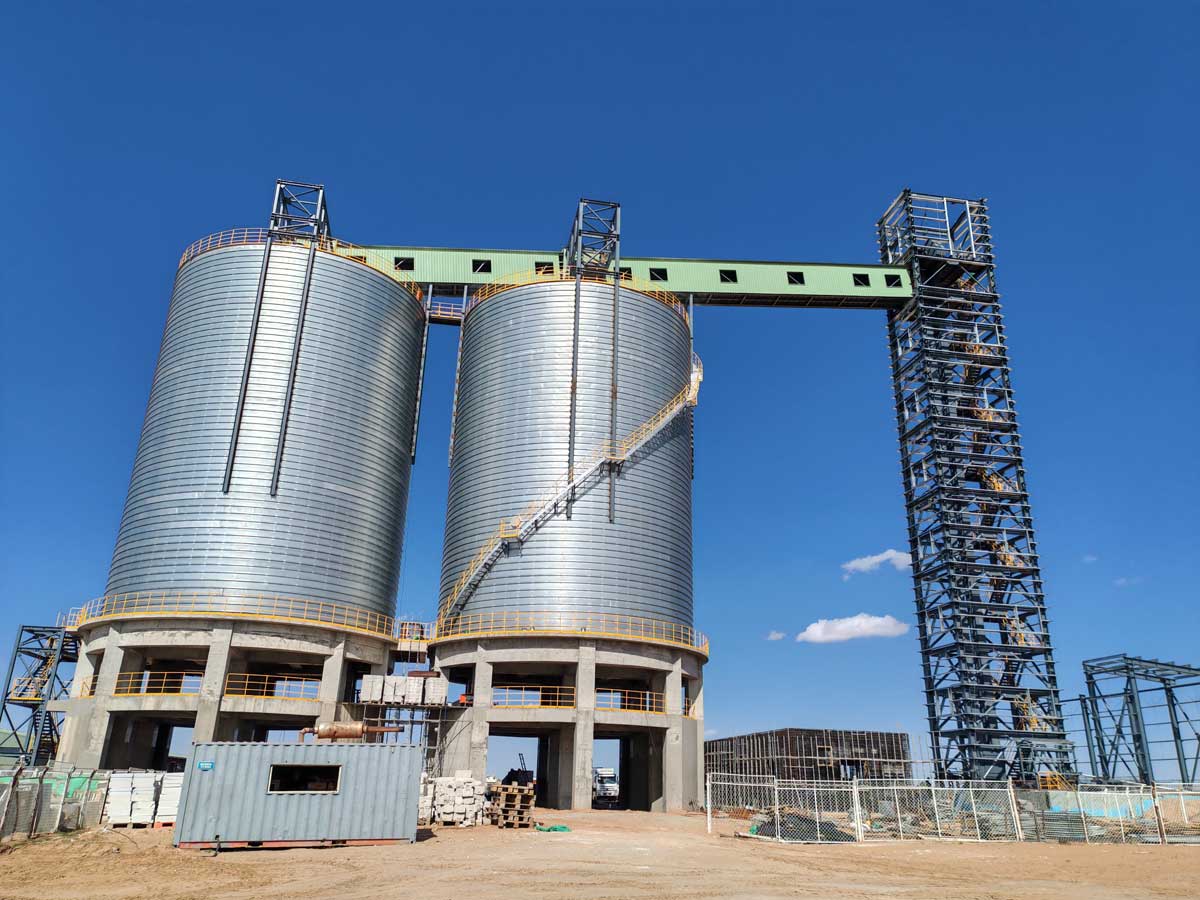
Steel silos typically feature bodies constructed from galvanized steel or other steel materials, utilizing mechanical conveying equipment for loading, storage, and unloading. Key characteristics include excellent sealing, a small footprint, high storage capacity, and a high degree of automation. They are particularly well-suited for bulk materials such as cement, fly ash, mineral powder, lime powder, and grain, as well as other powdery or granular substances. For production lines requiring continuous loading and unloading via screw conveyors, pneumatic conveying systems, or belt conveyors, steel silos can be easily integrated into the overall production system.
2. Enclosed Stockyards: Suitable for large-capacity, multi-variety bulk materials
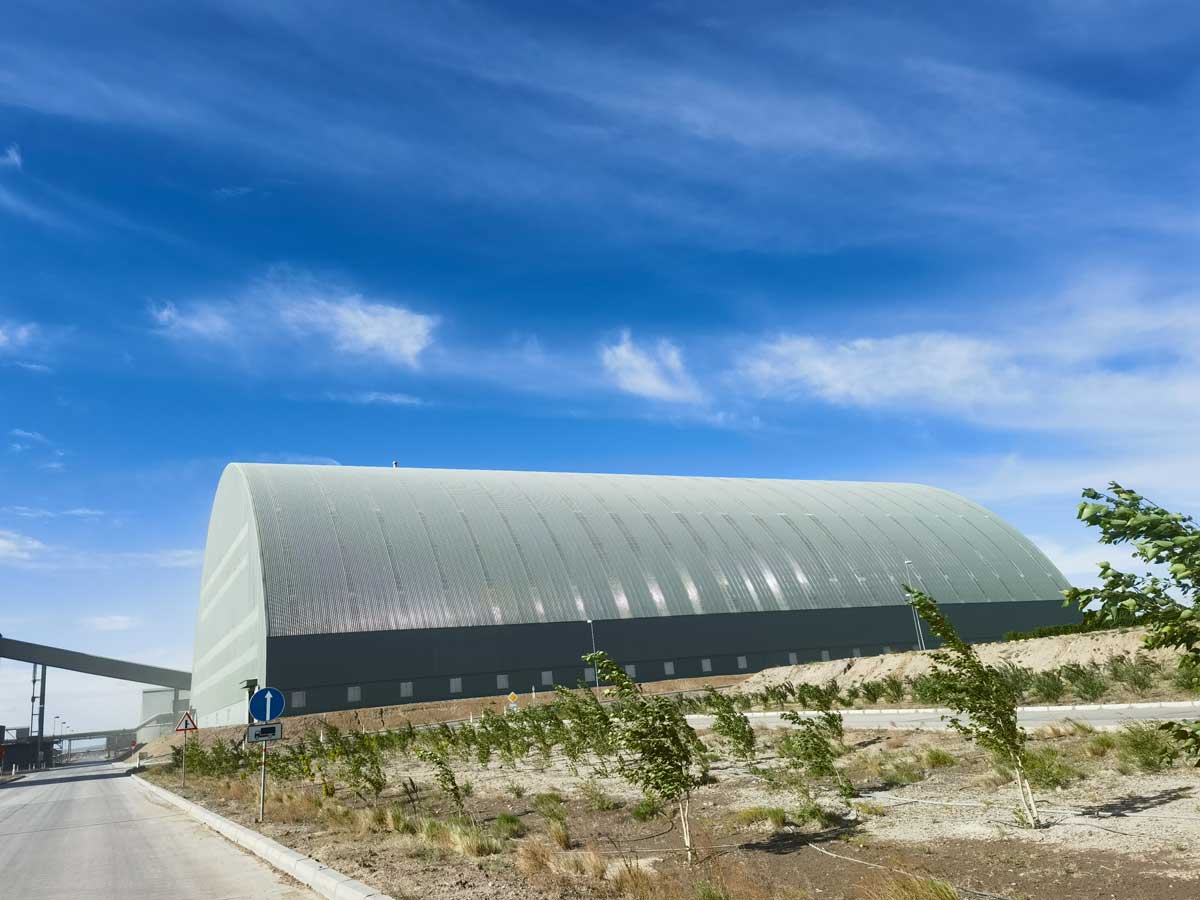
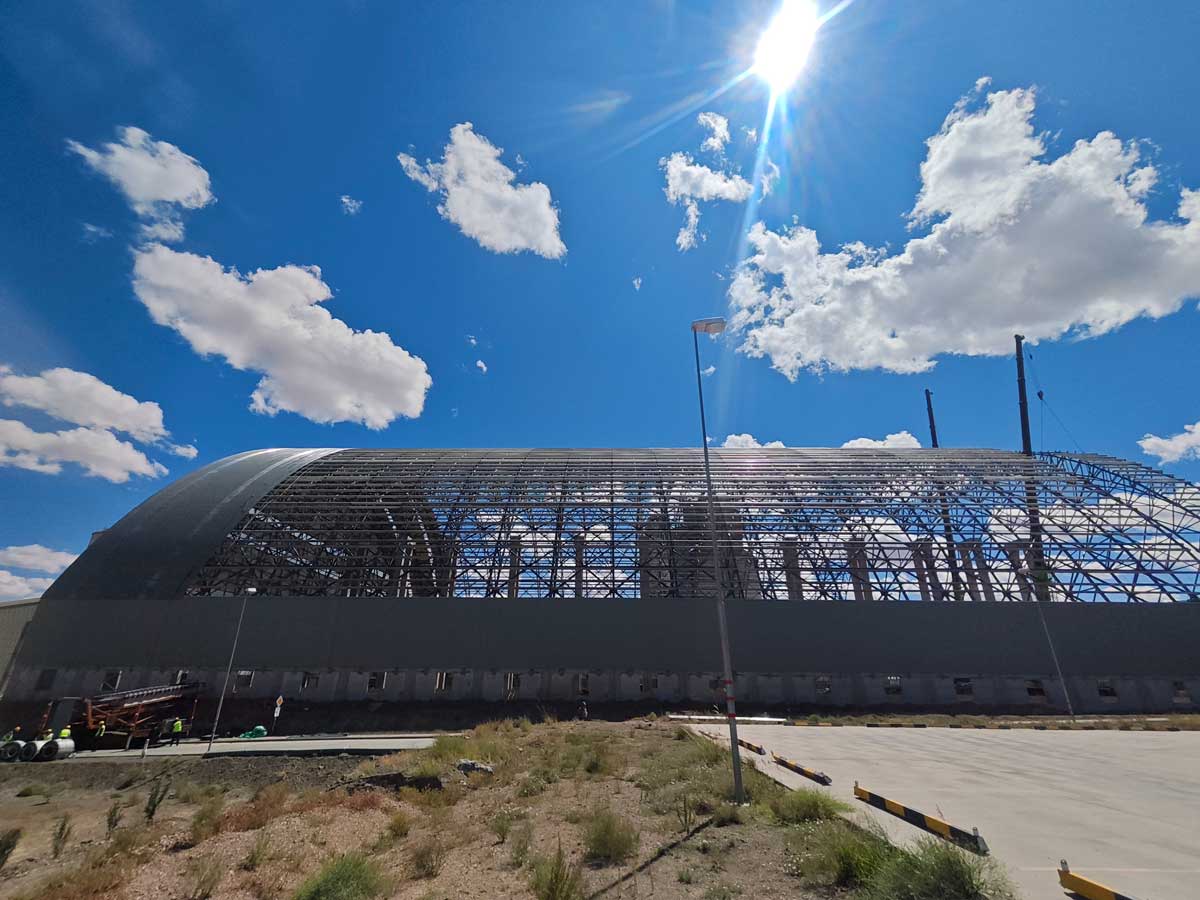
An enclosed stockyard generally consists of a steel structure, membrane structure, or other type of enclosure installed above the storage area to provide full coverage of the bulk material storage zone. Compared to steel silos, enclosed stockyard emphasize large-scale storage and flexibility in loading and unloading operations. They are highly adaptable to bulk materials such as coal, ores, sand and gravel, coke, and mining materials that require large-volume storage. Additionally, the enclosed structure mitigates dust dispersion, prevents rainwater ingress, and shields materials from wind, making them increasingly common in industrial projects with strict environmental standards.
3. Open Stockyards: Lower initial investment, but limited environmental adaptability
Open stockyards represent the most traditional method of bulk material storage, typically relying on equipment such as loaders, bulldozers, and stacker-reclaimers for stockpiling and transfer. Their primary advantages lie in simple construction, storage flexibility, and relatively low initial investment. However, open stockyards is susceptible to wind, rain, snow, and temperature fluctuations. For materials prone to dusting, moisture absorption, clumping, or quality degradation, additional measures—such as dust suppression, rain protection, and drainage systems—may be required. Consequently, as environmental regulations and corporate environmental standards become increasingly stringent, the suitability of open-air storage yards must be re-evaluated based on the specifics of each project.
How do you choose between the three bulk material storage solutions? (See the table below)
You can make a quick assessment using the comparison table below:
| Comparison Item | Steel Silo | Enclosed Storage Yard | Open-air Storage Yard |
|---|---|---|---|
| Storage Method | Vertical storage | Horizontal stacking | Horizontal stacking |
| Sealing Performance | High | Relatively high | Low |
| Rain Protection | High | High | Low |
| Dust Control | High | Relatively high | Relatively low |
| Footprint | Relatively small | Relatively large | Large |
| Automation Level | High | Medium-high | Medium-low |
| Multi-variety Storage | Unsuitable | Highly suitable | Suitable |
| Storage Scale | Small to medium | Large-scale | Large-scale |
This table can help the project team quickly narrow down the selection range, but the final solution still needs to be determined based on actual materials and production processes.
Under what circumstances are steel silos the preferred choice?
Steel silos are generally the preferred solution for projects with the following characteristics:
1. Powdered or fine-grained materials
Materials such as cement, fly ash, mineral powder, and lime powder are prone to generating dust. Steel silos provide a relatively sealed storage environment and can be designed to integrate with equipment such as dust collectors, pneumatic conveying systems, and screw conveyors.
This is particularly important for projects such as modern cement plants, concrete batching plants, and mineral powder processing facilities.
2. Need for precise discharge control
Steel silos offer distinct advantages when downstream equipment requires continuous, metered material feeding. Through the use of silo-bottom discharge mechanisms, metering devices, and conveying systems, a continuous supply of material from storage to the production line can be achieved.
3. Limited project site area
Steel silos utilize vertical storage, which typically reduces the required footprint for a given storage capacity. This is a significant advantage for industrial projects near urban areas, projects with high land costs, and the renovation of existing plants.
4. Desire for higher levels of automation
Steel silos can be integrated with PLC control systems, level sensors, weighing systems, conveying systems, and central control systems. This integration reduces the need for manual operation and enhances the efficiency of bulk material receiving, storage, and conveying.
Under what circumstances is an enclosed stockyard more suitable?
An enclosed stockyard often offers greater flexibility when the project involves storing bulk materials—whether in lump or granular form—across a wide variety of types. The primary advantage of an enclosed yard is its open spatial layout, which facilitates the operation of equipment such as loaders, stacker-reclaimers, and grab buckets. For projects requiring high-volume daily intake, material repositioning, and transfer, an enclosed yard provides ample space for mechanical operations. Furthermore, issues related to airborne dust can be effectively mitigated through the use of enclosure structures, dust removal systems, misting systems, and well-designed ventilation.
When do open stockyard still offer advantages?
Despite increasingly stringent environmental regulations, open stockyard have not lost their practical value. For materials that are impervious to rain, have relatively low sensitivity to dust, require only short-term storage, and where land is plentiful, open stockyard remain an economical storage solution. For instance, with materials such as large-scale aggregates and ores, operational costs can be minimized through the strategic planning of the yard layout, drainage systems, dust control measures, and loading/unloading routes.
However, a crucial point must be noted:
“Low cost” does not equate to the “lowest total cost.” If additional investments—such as dust suppression systems, rainwater collection facilities, material coverings, or environmental compliance upgrades—are required later on, the actual operating costs of an open-air yard could rise significantly. Therefore, one must look beyond the initial construction investment and consider the project’s total lifecycle cost.
.jpg)
Why are environmental regulations increasingly influencing bulk material storage solutions?
For industrial bulk material projects, environmental considerations have become a key factor in selecting the right solution. Powdered materials—such as fly ash, cement, mineral powder, and lime—are prone to generating dust during loading, unloading, and transfer. Open-air stockpiling poses risks where wind can cause dust dispersion, while rainfall can affect both the material’s condition and the surrounding environment. Consequently, projects subject to strict environmental regulations typically favor the use of steel silos or enclosed stockyards.
Steel silos allow for systematic control through features such as enclosed conveying, roof-mounted dust collection, and material level monitoring. Enclosed stockyards, meanwhile, offer comprehensive management by integrating dust collectors, misting systems, windbreaks, and fully enclosed structures. In short, the approach to modern bulk storage has shifted from merely asking “Can it be stored?” to considering whether storage can be safe, environmentally friendly, and efficient, while also enabling automated management.
Can steel silos and enclosed stockyards be used in combination?
Yes; in fact, for large-scale industrial projects, a combined storage solution is often more rational than relying on a single type of facility. For example, a cement production project might follow this workflow: limestone → enclosed stockyards → crushing system → production system → steel silos → packaging/bulk shipment.
Alternatively, the process might look like this: sand and gravel aggregates → enclosed stockyards → proportioning system → concrete mixing plant.
Meanwhile, powdered materials such as fly ash, cement, and mineral powder can be stored directly in steel silos. The core principle here is to select the storage method based on the specific characteristics of the material, rather than using a single type of storage facility for the entire project. For large-scale projects, this approach effectively balances storage capacity, environmental requirements, and production efficiency.
Steel silos, enclosed stockyards , and open stockyards each have their own suitable applications. Steel silos generally offer advantages when the project prioritizes enclosed storage, automation, a compact footprint, and the management of powdery materials. Enclosed storage yards are often more appropriate when the project requires high-capacity storage, the handling of multiple material varieties, and flexible mechanical loading and unloading. Open stockyards remain a viable option if the materials have minimal environmental sensitivity, land availability is ample, and the project prioritizes low initial investment.
For large-scale industrial bulk material projects, the most rational approach is not simply to weigh “steel silos versus storage yards,” but rather to select a solution based on a comprehensive assessment of material characteristics, storage capacity, environmental regulations, material handling methods, site conditions, and automation requirements. Only by thoroughly analyzing these factors at the preliminary stage can one select a bulk storage solution truly suited to the project’s long-term operation, while also laying the groundwork for subsequent equipment selection, cost estimation, and project implementation.